
VIP Programs and Comp Points · Daily read
What Is Rakeback? The Share of House Edge Paid Back
Rakeback returns a fixed share of the rake or house edge, win or lose. The sum from wager to payout, and how it stacks up against loss-based cashback.
By BonusCasino365 Almanac Desk, 5 min read
Day317
Entered under VIP Programs and Comp Points.
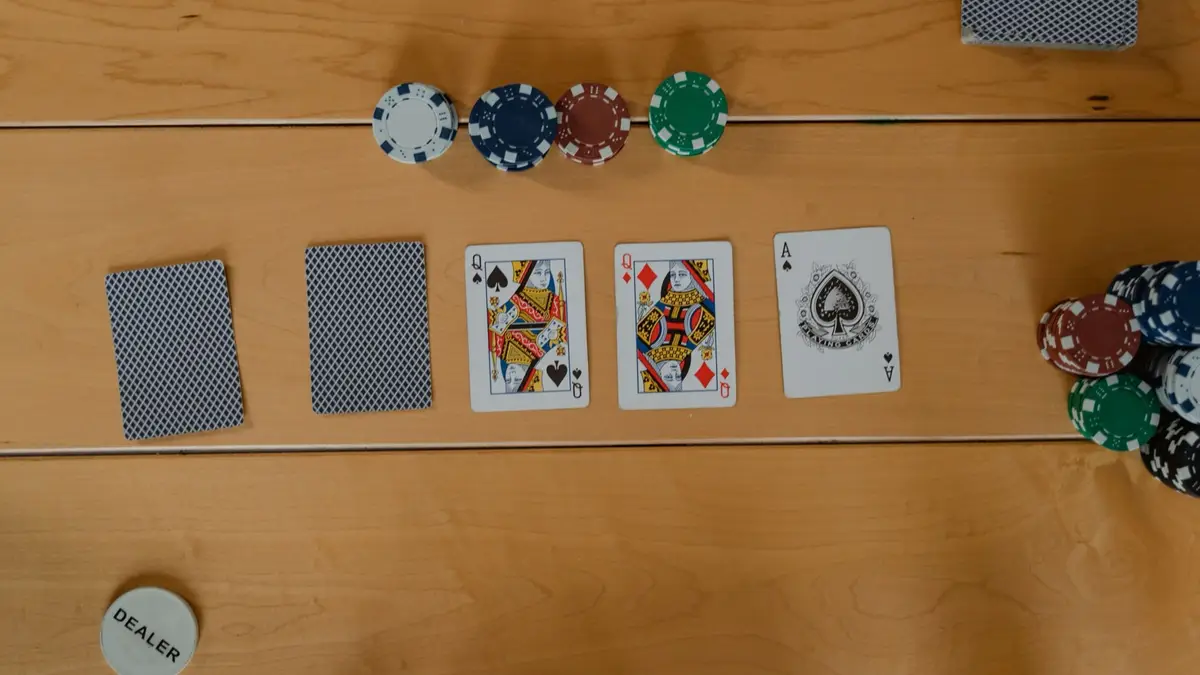
Rakeback is a rebate of part of the rake or house edge a player has paid, returned as a fixed percentage of that cut whether the session ended up or down. In poker it is a share of the rake taken from pots; in casino and sportsbook play it is a share of the theoretical house edge on the amount wagered. It rewards volume, not losses, which is why it pays very differently from cashback on the same play.
Rakeback meaning: what share is actually paid back?
Rakeback means a slice of the house's cut, not a slice of the stake. The rate looks small because it is applied to a small base: the rake or the theoretical edge, never the full wager.
In poker the house's cut is the rake, which runs at 2.5% to 10% of the pot up to a capped amount per hand (as of July 2025). Rakeback is the reward by which poker sites or their affiliates return part of the rake paid, or part of tournament entry fees.
Casino games have no pot to rake, so operators substitute the house edge. Stake's help center describes its rakeback as a fixed percentage based on wagering, earned whether the player wins or loses, and sets it at 3.5% of the house edge as of August 2026.
How is rakeback calculated, from wager to payout?
The sum has two multiplications: wager times house edge gives the theoretical (the house's expected take), and theoretical times the rakeback rate gives the payout.
| Step | Formula | Stake's worked example |
|---|---|---|
| Amount wagered | 1 BTC | |
| House edge of the game | 2% | |
| Theoretical | wager x house edge | 0.02 BTC |
| Rakeback rate | share of the theoretical | 3.5% |
| Rakeback paid | theoretical x rate | 0.0007 BTC |
Stake's own example returns 0.0007 BTC whatever the result on 1 BTC wagered at a 2% edge. Measured against the wager rather than the edge, that is 0.07% of the amount bet. A game with a higher house edge raises the theoretical and so the rakeback; a lower edge shrinks both.
Two details change the sum:
- Sportsbook bets use an assumed edge. Stake pays its rate on sportsbook bets using a default 3% house edge, not the real margin of each line (as of August 2026). The payout is the same on a tight market and a wide one.
- Entry can be gated by volume. Stake's rakeback starts at the Bronze level of its VIP Club, reached after $10,000 wagered (as of August 2026). That places it inside a tiered structure closer to VIP programs and comp points than to a one-off promotion, and it works much like the theoretical-based ratings described in Vegas casino comps.
How do poker rooms split rakeback in a hand?
At a poker cash table several players share one raked pot, so rooms need a rule for who paid what. There are two: dealt and contributed.
- Dealt: each player dealt into the hand gets the same rakeback, so a player who folds early is credited like one who played the pot.
- Contributed: rakeback follows each player's actual contribution to the pot.
Not every network allows the practice. Some forbid affiliates to give rakeback and run in-house loyalty programs instead.
Rakeback vs cashback: how do they compare on the same play?
Rakeback pays on volume; loss-based cashback pays on net loss, and only when there is one. Baji Live's help center describes a cashback calculated on weekly net loss, credited as real cash with no wagering requirement, at between 4% and 6% of net loss depending on the loss band (as of September 2026).
| Rakeback (Stake) | Loss-based cashback (Baji Live) | |
|---|---|---|
| Base | Theoretical house edge on wagers | Weekly net loss |
| Rate | 3.5% of the house edge | 4% to 6% by loss band |
| After a winning week | Still paid | Nothing to pay on |
| Other bonuses | Not netted in the stated method | Deducted from net loss first |
Applied to Stake's example play of 1 BTC at a 2% edge: a player who lost exactly the theoretical 0.02 BTC would get 0.0007 BTC as rakeback, or 0.0008 BTC at a 4% cashback rate. A player who finished the week up would still collect the 0.0007 BTC rakeback and no cashback. Cashback grows with the size of the loss; rakeback grows only with volume and edge.
Cashback also has a netting step that rakeback lacks. Baji Live deducts bonuses from other promotions from the weekly net loss before it applies a rate, which can push the adjusted loss into a lower band; its own worked case ends at the 4% rate after deduction. How refund terms like these vary across operators is covered in the casino cashback bonus entry, and deposit-matched alternatives in casino reload bonus terms.
Quick answers
In poker, what is rakeback?
It is a reward that returns part of the rake or tournament entry fees a player has paid. Online poker sites or their affiliates pay it, and cash-game rakeback is allocated by either the dealt or the contributed method.
Do casinos take a rake from poker games?
Yes. The house running the game takes its cut as rake, generally 2.5% to 10% of each pot up to a capped maximum (as of July 2025). Rakeback is a partial return of that cut.
Is rakeback paid after a winning session?
Yes. Because it is computed from the amount wagered and the house edge, not from results, it is paid whether the player won or lost. Loss-based cashback, by contrast, needs a net loss to pay anything.
Is rakeback the same as cashback?
No. Rakeback is a share of the house's theoretical take on every wager. Loss-based cashback is a share of net loss over a set period, and other bonuses can be deducted from that loss before the rate is applied.
Also in the almanac
Source notes
- Stake help center, What is Rakeback?, 24 August 2026
- Wikipedia, Rake (poker), 31 July 2025
- Baji Live help center, Unlimited weekly cashback of up to 6% on all games, 27 September 2026
End of the entry for Day 317

Also in the almanac

· VIP Programs and Comp Points
Royal Caribbean Casino Comps: The Coin-In Behind Each Tier
Club Royale tiers translated into slot and video poker coin-in, plus the expected loss at measured ship paybacks of 83% to 91%, as of November 2026.
by BonusCasino365 Almanac Desk

· VIP Programs and Comp Points
GTA Diamond Casino Membership: What Each Perk Was Worth
A GTA$500 fee, 1,000 free chips a day and VIP status sold with a penthouse. Each perk priced in real cents, next to how a real casino's tiers are earned.
by BonusCasino365 Almanac Desk

· VIP Programs and Comp Points
Rakeback Casino Math: What 3.5% of House Edge Returns
Rakeback is a share of the house edge, not of the stake. What a 3.5% rate pays back per bet on blackjack, baccarat and roulette, worked out game by game.
by BonusCasino365 Almanac Desk

· VIP Programs and Comp Points
How Many Tier Credits for Diamond: The Real Cost of Status
Diamond takes 15,000 tier credits: up to $75,000 of slot coin-in and about $5,400 in expected loss at Strip hold, or a one-day shortcut.
by BonusCasino365 Almanac Desk