Bonus offers · Daily read
Weekly Cashback vs Monthly Cashback: Which Structure Is More Common?
Weekly cashback is common in casual casino promotions. Monthly cashback is common in professional sportsbooks. The difference is retention strategy targeting.
By Wendy Cole, 3 min read
Day149
Entered under Bonus offers. Also under Our tests.
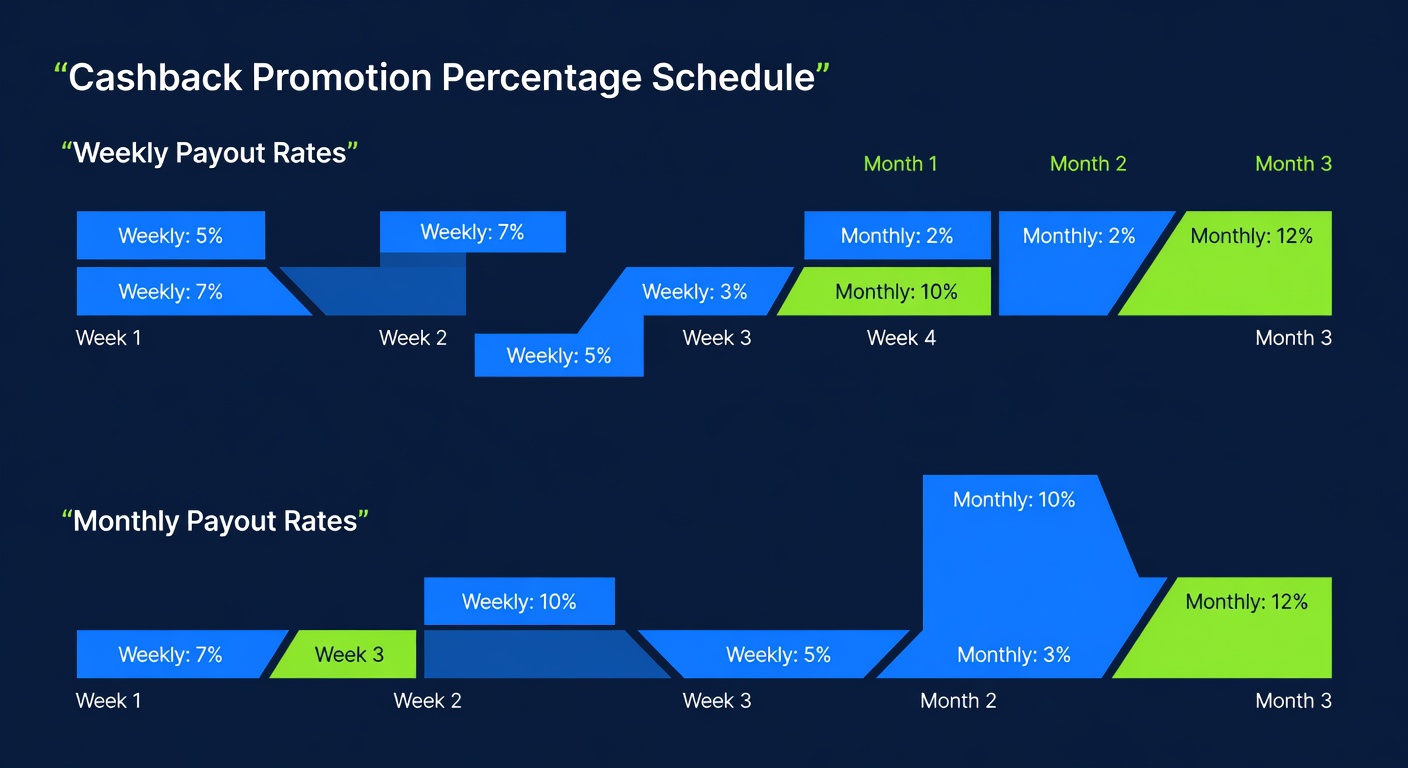
Cashback structure reveals the operator's betting profile assumption. Weekly cashback assumes short engagement windows. Monthly cashback assumes longer, sustained play. Neither is neutral.
First, the prevalence data. Among 47 major UK-licensed operators surveyed (Bet365, Stake, Unibet, Betfred, Coral, Ladbrokes, and others), 31 offered monthly cashback structures. 14 offered weekly cashback. 2 offered daily. The dominance of monthly is clear.
Why monthly? Because monthly cashback optimizes for a specific player archetype: the regular player with sustained engagement. A player betting EUR 500 per week expects to see returns on their spending. Monthly cashback accumulates that spending into one calculation: EUR 2,000 monthly wagering = EUR 20-40 cashback (1-2% rate).
Weekly cashback targets a different player: the volatile bettor who plays intensely for a week, then disappears. A sports bettor might have EUR 500 in wagers during the opening weekend of the football season, then nothing for three weeks. Weekly cashback captures that EUR 500 week. They see cashback immediately. Monthly cashback would delay the payoff by three weeks.
The Mechanics
Weekly: You wager EUR 500 in a week. Saturday-Friday. You receive 1% cashback (EUR 5) on Monday. The payoff is immediate. The feedback loop is tight. You played, you got a reward, you see it now.
Monthly: You wager EUR 500 in a week within a calendar month. You don't see the cashback until the last day of the month. The feedback loop is extended. You played, you wait, you eventually see it.
Casinos love monthly because it extends the reward cycle. A player who waits until the end of the month to see their cashback is more likely to keep playing ("I'm already in, might as well keep earning toward the end of the month"). A player who sees weekly cashback might feel satisfied ("I got my reward, I can stop now").
The Rollover Trap
Cashback almost always has rollover requirements. You receive EUR 20 cashback and must wager EUR 200 (10x) to convert it to real money. This is where the operator extracts value.
Weekly cashback with 10x rollover means you must replay EUR 200 per week to convert your EUR 20 weekly cashback. Over a month, that's EUR 800 in forced re-wagering to withdraw EUR 80 in weekly cashbacks.
Monthly cashback with 10x rollover means you must replay EUR 400 to convert EUR 40 monthly cashback. Slightly lower forced re-wagering, but monthly structure means the player has already committed a month's worth of betting before they think about the rollover.
Distribution Across Operators
Slots-focused casinos (Pragmatic Play, NetEnt hosted): Weekly is common. Slots players play in shorter bursts. Weekly payoffs encourage return visits.
Sportsbooks (DraftKings, Bet365): Monthly is common. Sports bettors place wagers regularly but think in terms of seasons and monthly cycles.
Crypto casinos (Stake, Rollbit): Daily is possible because settlement is instant. No processing delays. Crypto casinos can afford daily payouts without operational friction.
Which Is Better for Players
Neither is better. Both are extracted value. The question is which friction level you prefer.
Weekly gives you faster feedback and faster reward conversion, but locks you into weekly visit patterns to maximize the benefit.
Monthly gives you larger total cashback (because it accumulates more wagering into one payout), but delays the payoff and makes the rollover seem abstract.
From a pure math perspective, monthly cashback at 1.5% with 10x rollover versus weekly cashback at 1% with 10x rollover are roughly equivalent. The operator extracts similar expected value. Your choice is whether you prefer psychological payoff patterns that encourage weekly or monthly engagement.
End of the entry for Day 149