Deposits & cashouts · Daily read
Online Poker Regulation Around the World: A Regional Overview
Online poker is legal in some countries, banned in others, and operating in legal gray zones in most. The regulatory patchwork reflects different choices about consumer protection and revenue.
By Sam Ortega, 3 min read
Day173
Entered under Deposits & cashouts. Also under Poker and Licences & law.
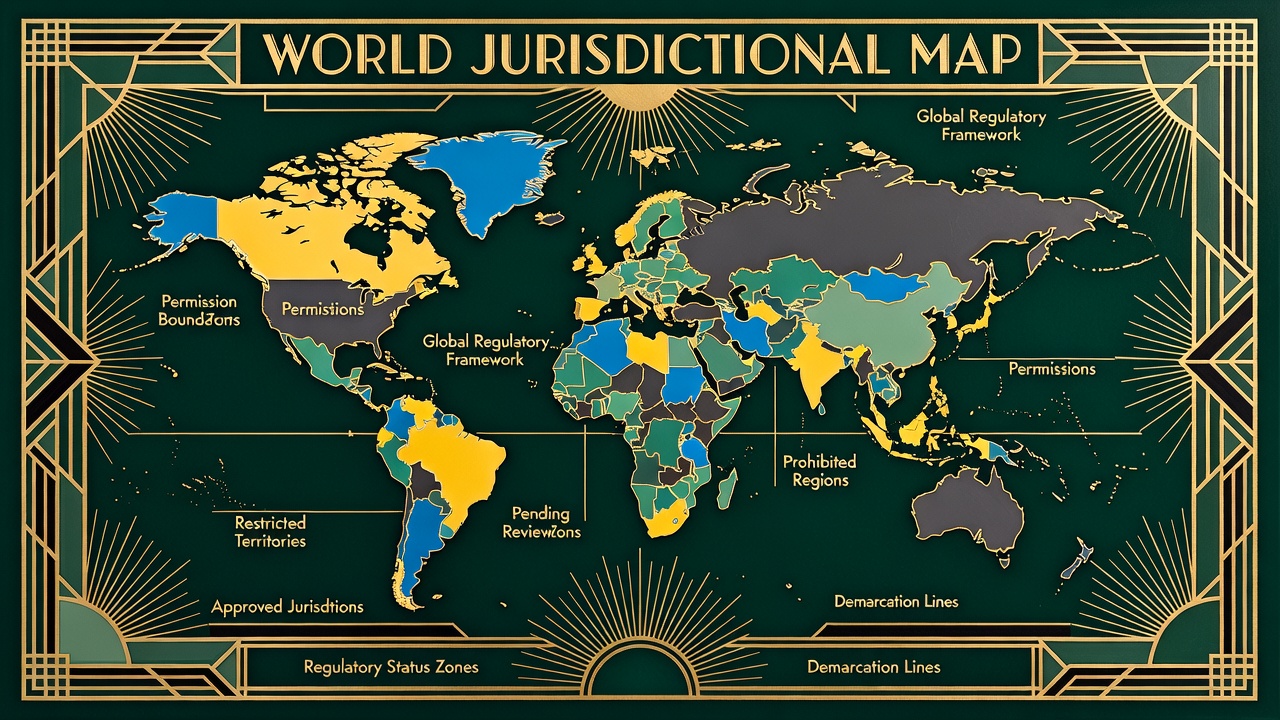
Online poker exists in a state of permanent jurisdictional uncertainty. What is legal on Monday might be illegal on Tuesday. What is fully regulated in one country is completely banned in the neighboring one.
Start with the United States. Online poker was broadly illegal until 2017, thanks to the 2006 Unlawful Internet Gambling Enforcement Act. That changed when individual states began licensing operators. Nevada went first in 2013. New Jersey followed. Now more than a dozen states have legal, regulated online poker. But federal law is still ambiguous. A state can license a site, and that site can still be prosecuted in federal court if someone interprets the federal law differently. Unlikely, but possible.
The practical effect is that American players can use state-licensed sites with reasonable confidence, but the uncertainty premium is built in. Operators pay higher licensing fees and higher compliance costs precisely because the legal landscape is uncertain.
Europe is different. The UK has a single regulator, the UKGC, which licenses online poker operators. If you have a UKGC license, you can legally take deposits from UK players. Same for Malta. Malta Gaming Authority license equals legal operation in Malta and most of Europe. The regulatory landscape is simpler. Operators know the rules.
Other countries are murkier. France has its own regulator and prohibits offshore operators from taking French players. Italy does the same. Germany does the same. Each country reserves the right to monopolize online gambling. This creates a patchwork where a single operator needs licenses in multiple countries to serve a European market effectively.
Asia is largely prohibition. China bans gambling entirely. So does Thailand. South Korea has a partial license system. Japan legalizes some gambling but not online poker. The practical effect is that Asian players either play on unlicensed offshore sites or do not play at all.
Canada is weird. Federal law prohibits operating an online poker site from Canadian soil. But provincial governments can license operators. So Ontario’s recent iGaming licensing created a legal market that is technically prohibited at the federal level, with the federal government choosing not to enforce against provincially-licensed sites. It is a legal gray zone that somehow works.
SouthAmerica is mostly unregulated. Colombia, Argentina, and Chile do not have clear laws either way. Operators set up shop. Players play. No one enforces vigorously. That creates another type of uncertainty: not legal certainty, but practical certainty that enforcement will not happen.
Australia banned online gambling in 2001, but the law has not been aggressively enforced against specific operations. Australian players use offshore sites. Australians make up a significant percentage of PokerStars traffic. The government technically prohibits it. Practically ignores it.
What This Means for Players
If you want to play online poker, the jurisdiction you live in matters enormously. In the UK, you have choices from licensed operators competing on service. In Italy, you have a smaller selection but legally guaranteed operators. In the US, it depends which state you are in.
In unregulated jurisdictions, you are gambling on the site not disappearing. A player deposits funds into an Australian-based site that claims to be licensed in a Caribbean jurisdiction you have never heard of. If the site vanishes, your funds vanish with it. The regulator that does not exist cannot help you.
This creates a global market where players in regulated countries pay higher fees (because operators have higher compliance costs) while playing on safer sites. Players in unregulated countries pay lower fees but accept higher risk. The equilibrium is maintained by competitive pressure.
Where Regulation Is Heading
The trend globally is toward more regulation, not less. As governments realized online gambling generates tax revenue, they began licensing operators rather than just banning them. This happened in the UK in 2005, in Italy in 2010, in Nevada in 2013, in New Jersey in 2013, and continuing.
The US is likely to move toward federal regulation eventually. The current state-by-state approach is inefficient for operators and players. A single federal framework would be cleaner. But federal regulation would also increase compliance costs, which would be passed to players.
For now, the landscape is what it is: regulated in some places, prohibited in others, unenforced in still others. If you are shopping for an online poker site, your location determines your options. The responsible approach is to play only on licensed sites in your jurisdiction, even if that means paying slightly higher fees or having fewer choices.
It is boring advice. But it is the math.
End of the entry for Day 173