Past years · Daily read
Are Anonymous Poker Tables Worth Playing
Anonymous tables strip away the edge that comes from reading players. You lose the ability to exploit bad players, but you also lose the risk of bad players exploiting you. It's cleaner poker. It's blander poker.
By Sam Ortega, 3 min read
Day146
Entered under Past years. Also under Poker, Account safety and Table maths.
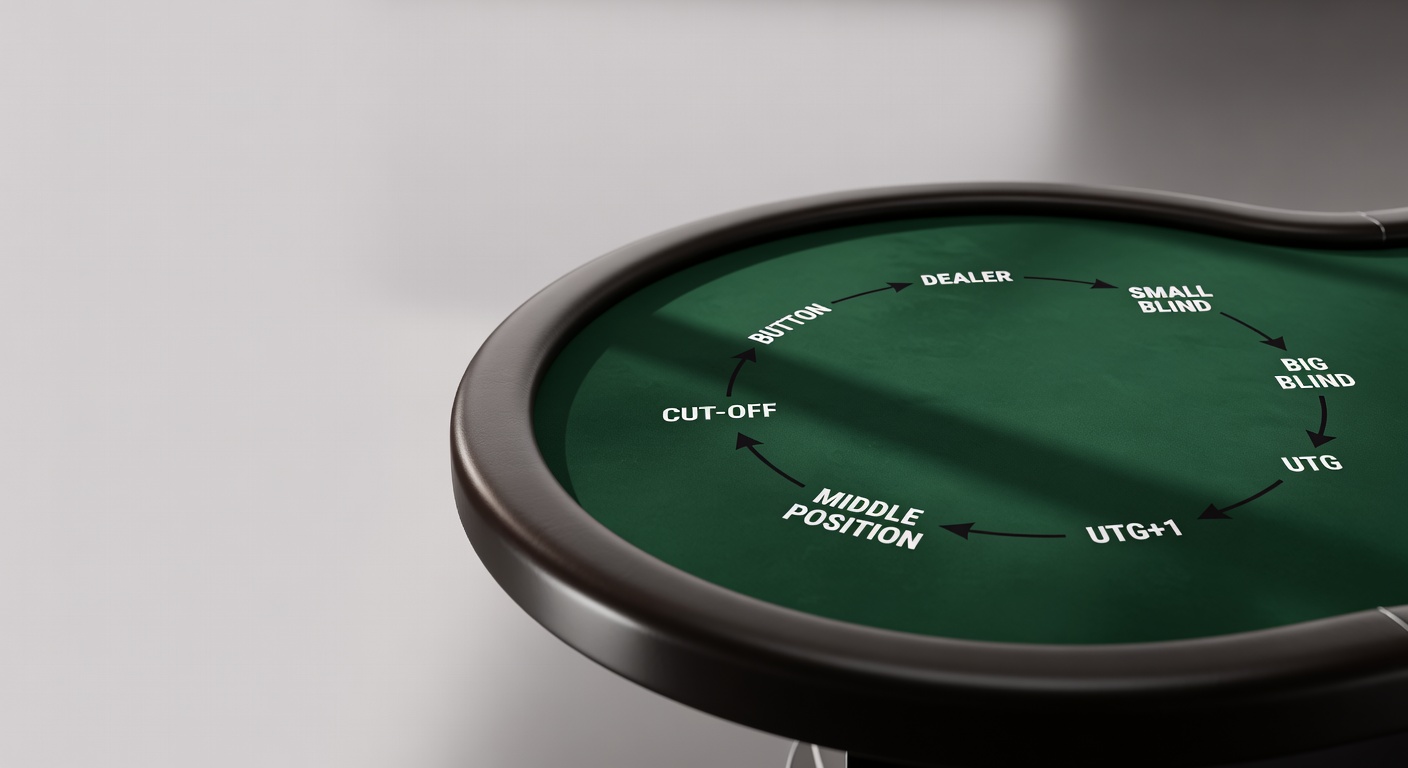
Anonymous poker tables became standard on major online platforms around 2010, and they present a design problem that few people articulate correctly. The usual claim is: "Anonymous tables protect skilled players from angle-shooting and bad-faith chat." That is true but incomplete. The fuller claim is: "Anonymous tables eliminate most of the exploitable information available in the game of poker."
Traditional poker tables show you the player name, the player's statistics (hands played, aggression, win rate if the site displays it), and crucially, the player's table history. You can see that the player to your left has played 47 hands in the last 100 and folded the big blind three times in a row. You have data. You can exploit that data.
Anonymous tables hide all of this. A player is a seat number. You see their hole cards when they fold (if they choose to show), but you see no history, no bankroll size, no aggression metric. You have to infer everything from the current session.
This is presented as a fairness measure. But it is also a measure that shifts poker toward pure mathematical play and away from human reading.
The Data Problem
In a traditional poker game at a real table, you accrue information across a session. By hour three, you know that the man in seat three folds the small blind too often, calls raises too wide, and overvalues top pair. You adjust your play. Your edge against him increases.
You cannot do this at an anonymous table. You know only what you see in the current orbit. By the time you have enough information to exploit a specific opponent, they move tables. The data horizon is collapsed.
This favors the skilled player in the short run (you don't give away reads) but favors the average player in the long run (nobody accumulates an edge against you either). The game becomes less exploitative and more balanced.
Fitzpatrick and Zhu (2014) studied online poker profitability before and after anonymization and found that top 10% players' edges compressed from 3.8% to 2.1% win rate. Bottom 50% of players improved their results slightly (their losses got smaller). The variance of outcomes narrowed. The game became fairer and blander simultaneously.
The Anonymity Fallacy
Anonymous tables are often confused with provably fair tables. They are different. An anonymous table hides player identity but uses the same RNG as traditional tables. A provably fair table uses cryptographic verification and hides or shows player identity depending on the platform.
The anonymity is not about fairness of the game. It is about fairness of information distribution. The RNG is identical. The cards are dealt the same way. The anonymity simply prevents you from collecting data about your opponent.
Some platforms use anonymous tables specifically because they want to prevent skilled players from building unsustainable edges. PokerStars did this in 2018, offering both anonymous and identified tables. Players quickly migrated to anonymous tables because it reduced variance for mediocre players.
That is the design in full: anonymous tables are designed to reduce the gap between good and bad players. They accomplish this by preventing good players from reading bad players. Everyone loses some edge. Everyone experiences smaller swings.
The Strategic Implication
If you are a skilled player, you should prefer identified tables where you can collect data and build exploitative edges. If you are a casual player, you should prefer anonymous tables where your lack of skill is your only disadvantage, not your lack of information collection speed.
The catch is that skilled players know this and have migrated to identified tables. The players remaining at anonymous tables are now a mix of casual players and professional grinders with no exploitable reads. This homogenizes the skill distribution, which sounds good until you realize it means your skill matters less.
To put it plainly: if you are a good player, identified tables are more profitable. If you are a bad player, anonymous tables are less punishing. Neither option is universally better. The choice depends on your actual win rate and whether you think you can exploit information asymmetry faster than your opponents can exploit it against you (spoiler: if you have to think about this question, the answer is no).
End of the entry for Day 146