Primers · Daily read
How to Verify a Poker Site's Legitimacy Before Depositing
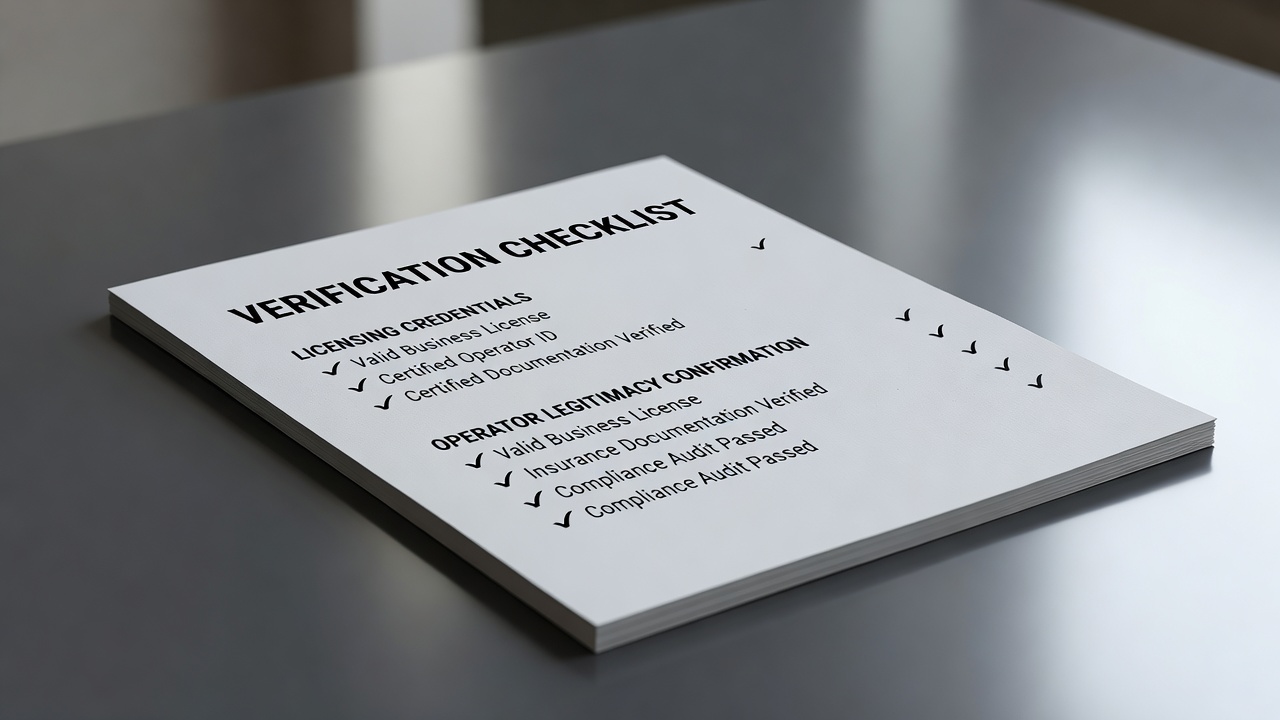
Before depositing at an online poker room, verify the license, check for complaints, and review the operator's track record. Real verification takes fifteen minutes and prevents costly mistakes.
By Wendy Cole, 4 min read
Day178
Entered under Primers. Also under Deposits & cashouts, Poker, Account safety and Session habits.
The gentleman arrives at the casino with nothing but a leather attaché case and a knowledge of which hand beats which. He does not ask about the establishment's pedigree. He simply checks whether the air conditioning works and the bourbon is adequate.
We, in the digital age, have the luxury of due diligence. We can investigate a poker site before handing over money in a way that gentleman could not. We should use that luxury.
The starting point is the license. Every legitimate online poker site holds a license from a regulator. The regulator is usually one of the major ones: UKGC (United Kingdom), MGA (Malta), Ontario, New Jersey, Pennsylvania. Some sites hold licenses from smaller regulators in Cyprus or Curaçao. These are less stringent but still real.
You should verify the license exists. The poker site should prominently display their license number. You should go to the regulator's website and search for that number. If the license is listed, it is real. If it is not listed, the operator is lying.
Regulators publish lists of licensed operators. You can check PokerStars against the UKGC database. You can check Bovada against the Curaçao eGaming registry. If the site is not on the list, it is not licensed. If it is not licensed, you are taking substantial risk.
Checking Player Complaints
The next step is to check whether players are complaining about the site. Search for the site name plus "complaints" or "scam." If nothing negative appears, that is good. If there are complaints, read them carefully.
Legitimate complaints are usually about slow payouts or technical issues. A site might have legitimate complaints and still be trustworthy. These things happen.
Fraudulent complaints are about the site refusing to pay out winning balances, or paying out only after months of delay, or asking for excessive verification documentation. If you see patterns of people saying the site will not send their money, you do not play there.
Player forums like TwoPlusTwo and Reddit poker communities also discuss sites. These communities are honest about reputation. If a site is stealing money, the poker community will know. Check what they say.
Reviewing Track Record
How long has the site been operating. A site that has been running for ten years is less likely to suddenly fold than a site that launched last month. Longevity is not a guarantee of legitimacy, but it is a signal.
You should also check whether the site has been involved in legal action. Has the operator been sued. Has the operator been fined by regulators. PokerStars was shut down in the US in 2006, which was a major violation, but they recovered and are now licensed. Full Tilt Poker collapsed during a fraud scandal and never recovered.
You can search SEC filings and court records for information. A public company will have more information available. A private company will have less, but basic legal information is usually findable.
The Payout Test
If you are still uncertain after the above checks, you can run a small payout test. Deposit a small amount of money, play enough to clear any bonus, and request a withdrawal. If the site processes the withdrawal cleanly within a few days, the site is probably legitimate.
If the site asks for additional verification documents before processing the withdrawal, that is normal. KYC requirements exist at legitimate sites. But if the site asks for unusual documents, or refuses to process the withdrawal indefinitely, you know the site is unreliable.
A payout test costs you the time to play and small transaction fees, but it is cheap insurance against depositing a large sum at a fraudulent site.
Red Flags
- No visible license information
- License not verifiable on the regulator's website
- Multiple complaints about delayed payouts
- Site refuses to provide clear terms and conditions
- Bonus terms are vague or impossible to clear
- Site operates from a country with weak gaming oversight and no regulator
- Domain registered recently
- Poor customer service response
What To Do If You Get Stuck
If you deposit at a site and then find out it is unreliable, you have limited options. If the site is licensed in a regulated jurisdiction, you can file a complaint with the regulator. The regulator might be able to force the site to pay.
If the site is unlicensed, your options are limited to credit card disputes or bank chargebacks. These have a time window, usually 60 to 180 days. If you wait longer than that, you lose the option.
The best approach is to never get to that point. Spend fifteen minutes verifying before you deposit. It is the difference between losing a few pounds and losing hundreds.
End of the entry for Day 178