Sports bets · Daily read
Uncut Gems Explained: What the Film Reveals About Betting Addiction
The film "Uncut Gems" is a clinical portrait of someone in the grip of problem gambling. Adam Sandler's character is not an exception. He is a type.
By Neil Harper, 2 min read
Day191
Entered under Sports bets. Also under Who's who.
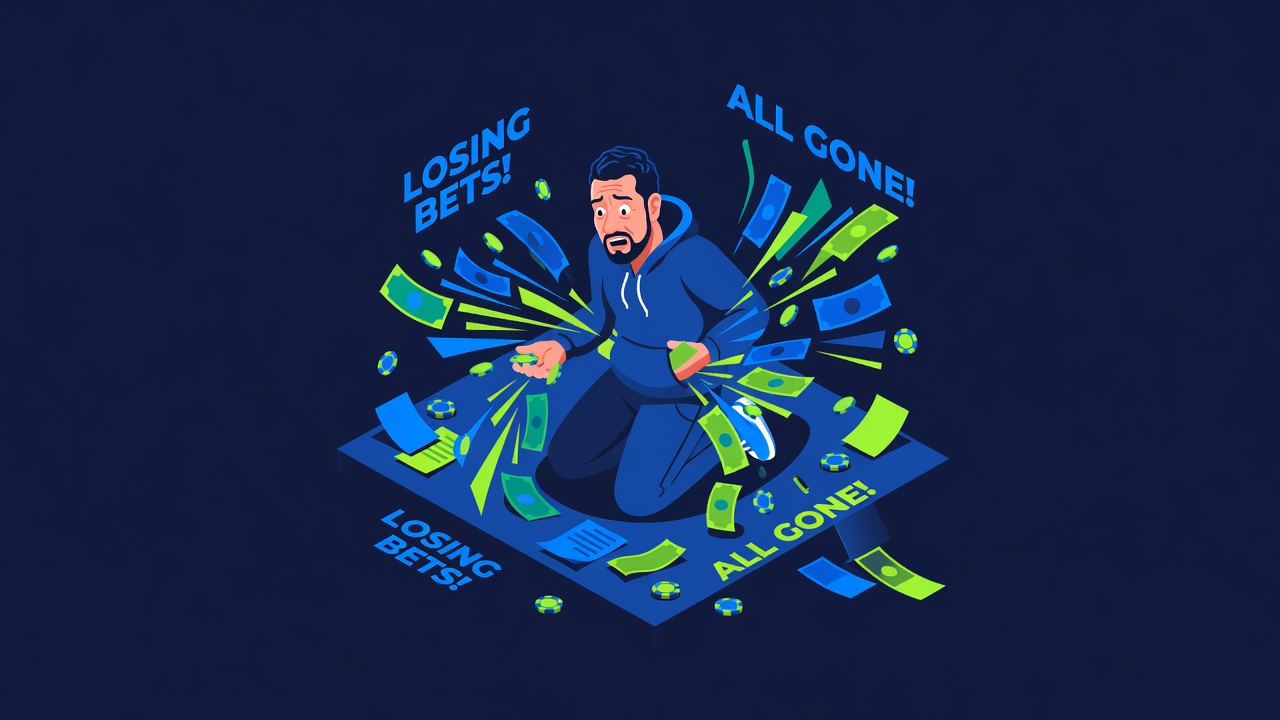
The film "Uncut Gems" portrays a man named Howard Ratner who is unable to stop betting. He has money. He has success. He has everything to lose. He bets anyway. He loses. Then he bets more.
From a clinical perspective, this is a textbook presentation of disordered gambling. The psychological mechanisms are visible throughout the film. Each one is a recognizable pattern to anyone who studies this behavior.
The Variable Ratio Reinforcement Schedule
Throughout the film, Howard is betting on basketball games. Sometimes he wins. Sometimes he loses. The wins are unpredictable, which means they function as a variable ratio reinforcement schedule.
In behavioral psychology, variable ratio reinforcement is the most addictive form of reinforcement. The brain does not know when the next reward is coming. So it keeps pulling the lever. Slot machines operate on this principle.
Howard keeps betting because sometimes he wins. The unpredictability is the hook.
The Chasing Losses Pattern
When Howard loses, he does not stop. He bets more. This is called chasing losses. The logical approach after a loss is to reduce bet size or stop playing. Howard increases bet size.
Chasing losses is one of the clearest markers of problem gambling. It indicates that the person has lost control of their betting strategy. The decision to bet is no longer based on analysis. It is based on the need to recover.
The Near-Miss Effect
The film shows Howard getting very close to winning multiple times. A bet that is almost a winner. A game that almost goes his way. Near-misses feel like they could have been wins, which activates the same regions of the brain as actual wins.
This is the near-miss effect. It makes a close loss feel like it is close to a win, which motivates continued play.
The Mood Regulation
Howard uses gambling to regulate his mood. When he is anxious, he bets. When he is depressed, he bets. The betting is not about money. It is about feeling something.
This is a hallmark of problem gambling. The gambler is using gambling to manage emotional states. The outcome becomes secondary to the act.
What the Film Gets Right
The film does not judge Howard. It does not moralize. It just shows the progression. The escalation. The isolation. The way the family suffers. The way the work suffers. The way the betting becomes the only thing that matters.
This is accurate. Problem gambling looks from the inside like a series of rational decisions. Each bet feels like it could work. Each loss feels like bad luck, not like a sign to stop.
From the outside, it looks like madness. The progression is clear. The outcome is inevitable. But to the person gambling, it is the only possible path.
"Uncut Gems" is not entertainment disguised as art. It is documentation of a psychological state that millions of people recognize because they have lived it.
If you watch the film, you are watching someone in the grip of an addiction that is entirely psychological. There is no substance. Just the compulsion to bet. The compulsion to lose. The compulsion to bet again.
That is the film. That is also a lot of people's lives. The line between entertainment and documentary is very thin.
End of the entry for Day 191