Headlines · Daily read
The Tim Donaghy NBA Referee Betting Scandal
NBA referee Tim Donaghy was caught betting on games he officiated, including games he had likely influenced. The investigation revealed how a single corrupted official could alter outcomes across an entire league.
By Chris Vaughn, 2 min read
Day170
Entered under Headlines. Also under Rule breakers and Sports bets.
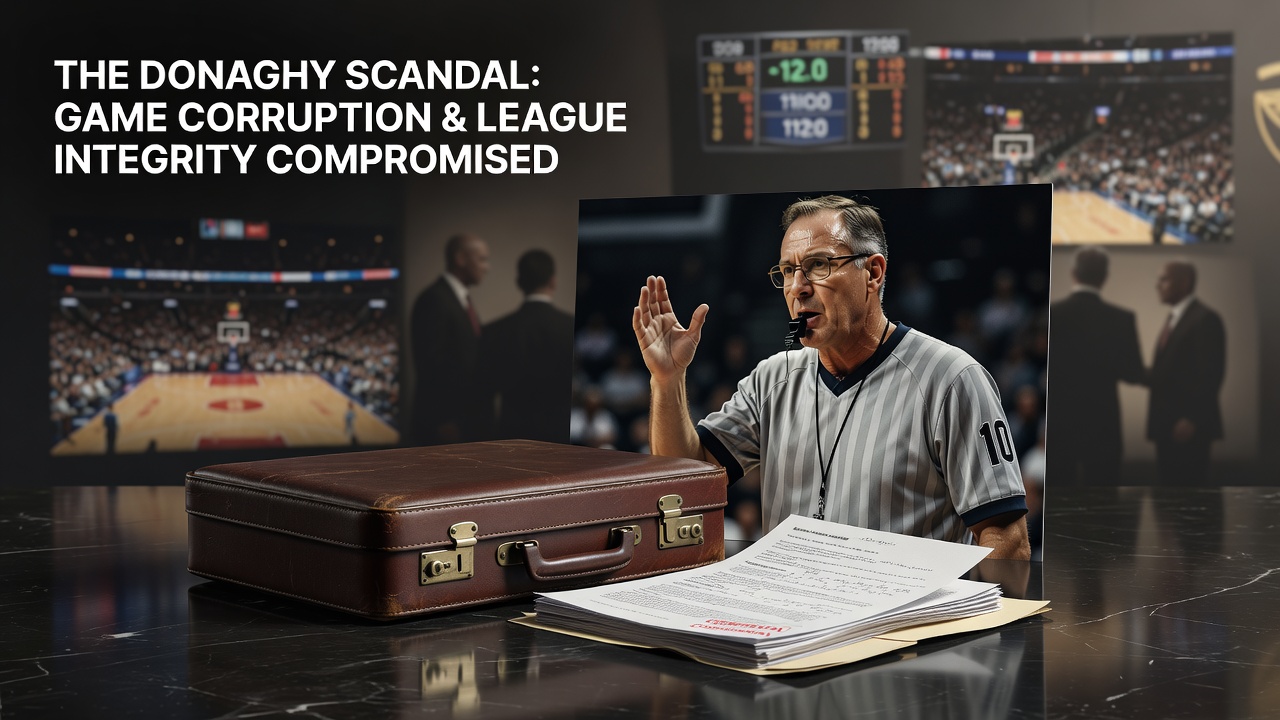
I remember when the story broke. July 2007. Tim Donaghy, a 13-year NBA referee, had been betting on games. Not just betting on games. Betting on games he was officiating. The news hit the Atlantic City crowd like a betrayal.
I was tending bar at a sports book on the Boardwalk when the wire came through. The room went silent. Not because anyone had lost money that day, but because everyone realized they might have lost money years before without knowing it.
Donaghy started betting through a friend with connections to organized crime. He wagered on NBA games. Initially he bet on games he was not officiating. But by 2006, he was betting on games he called. Not every game, perhaps not even most games. But enough games that the pattern became visible when the investigation started.
He did not confess to influencing games initially. He claimed he only had inside information about team health, motivation, and matchups. He could predict outcomes without affecting them. That theory fell apart when investigators examined the specific games he had wagered on. The outcomes favored his bets at rates that exceeded random chance.
The Impact on Integrity
The Donaghy scandal shook professional sports because it proved something obvious but unstated: one official with access and motivation could alter outcomes. The NBA's claim that 82 games of internal oversight would prevent corruption was revealed as insufficient.
Here is the mathematics. An NBA game has two teams, dozens of decision points, and a final score. The referee influences a fraction of those decisions through calls that affect game flow. That influence is usually marginal. But marginal influence compounds across four quarters. If a referee makes a few carefully chosen bad calls, the probability of a specific outcome changes from 50 percent to 55 percent or 60 percent. That is enough to change money.
Donaghy's co-conspirators included members of the Gambino crime family, which shows how seriously organized crime took the opportunity. If a single referee could reliably shift odds by three to five percent, the profit potential is enormous. A wise guy with 10,000 dollars could convert that into 11,500 in a season.
After Donaghy, the NBA implemented enhanced scrutiny of officiating. Betting patterns were monitored more carefully. Referees had restrictions on gambling placed directly in their contracts. The league also became slightly more aware of how corruption could propagate.
But the underlying lesson was grim. In any large competitive enterprise with betting markets, someone will eventually attempt to corrupt outcomes. The only question is whether the safeguards are good enough to catch it. The Donaghy case proved the NBA's safeguards were not good enough. After investing heavily in monitoring, they likely are now. But other sports remain vulnerable.
The Current State
Today, leagues employ investigators dedicated to identifying suspicious betting patterns. The FBI monitors organized crime connections to officials. But the fundamental vulnerability remains: officials have access and influence.
The Atlantic City I remember is gone now. The casinos moved online. The bookmaking moved to digital platforms. But the vulnerability that Donaghy exploited is still there, just harder to detect and prosecute.
The scandal was a reminder that integrity in sport is not automatic. It requires constant vigilance. And sometimes, despite all vigilance, it fails.
End of the entry for Day 170