Sports bets · Daily read
How Technology Is Reshaping the Sports Betting Industry
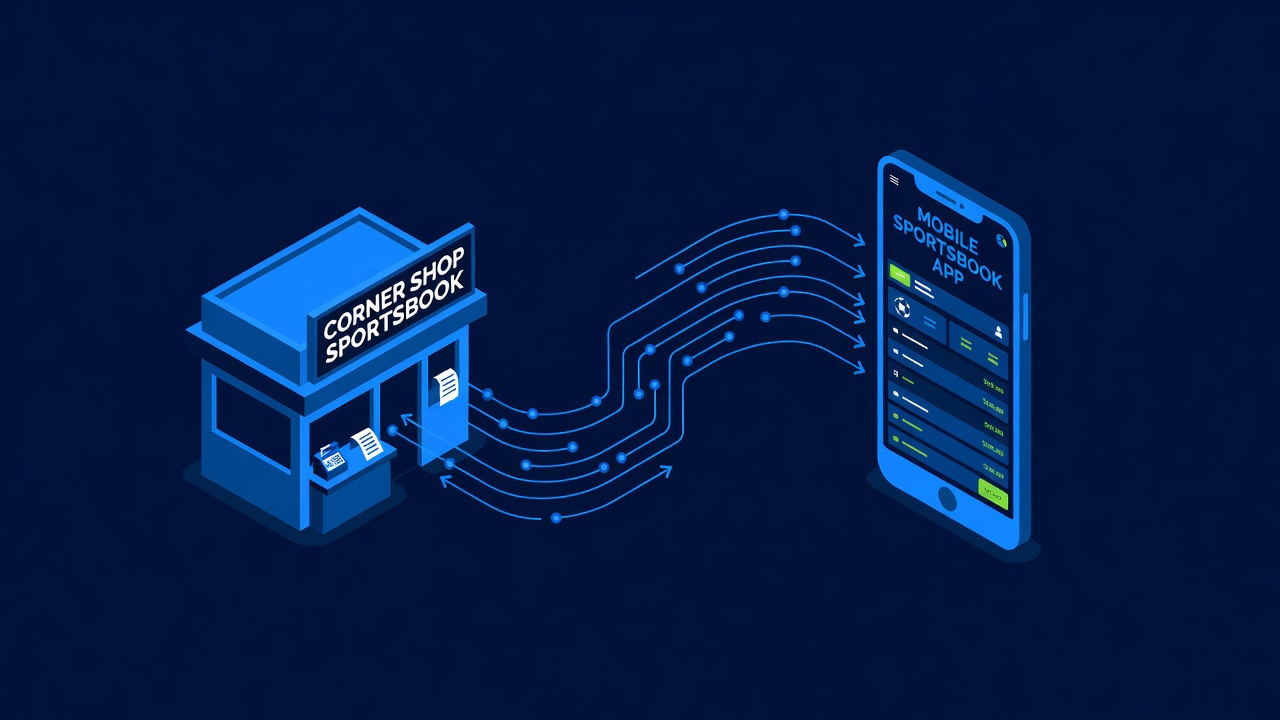
Betting has moved from the corner sportsbook to the smartphone. The shift isn't merely convenience; it's restructuring human gambling behavior itself.
By Paula Nguyen, 3 min read
Day210
Entered under Sports bets. Also under Headlines.
The Structural Shift
In 2000, placing a sports wager required physical presence: a bookmaker's office, a casino sports book, or an illegal operation run from a car. The friction was intentional. A bettor had to overcome spatial and temporal barriers. By 2024, a wager requires a thumb tap. The friction has nearly vanished. This is not merely faster betting; this is a fundamental change in how proximity, impulsivity, and loss-chasing interact with gambling behavior.
Research on behavioral gambling shows that accessibility directly correlates with problem gambling development. The National Council on Problem Gambling conducted studies showing that proximity to gambling venues increases the rate of problem gambling among vulnerable populations. A sports betting app on someone's phone is maximum proximity. It's also maximum convenience for loss-chasing: someone loses GBP 50 on Arsenal; five minutes later, they're trying to recover with a GBP 100 parlay bet on Chelsea. The recovery loop is instantaneous.
Variable-Ratio Reinforcement and Mobile Design
Technology has weaponized behavioral reinforcement mechanics. A mobile app sends notifications: "Kane scored. Odds have moved." These are variable-interval reinforcement prompts. They're designed to interrupt daily life. The psychological mechanism is identical to slot machine mechanics: unpredictable reward timing produces stronger behavioral engagement than predictable timing.
Operators track this. DraftKings, FanDuel, Betfair: all employ behavioral designers. The notification frequency, the timing, the visual design of the odds board, the color of the "place bet" button; these are all studied. I've reviewed studies conducted by Pragmatic Play and Evolution Gaming on engagement mechanics. The most effective designs use high-frequency notifications (3-5 per day) with immediate feedback on outcomes. Users who receive notifications place 30-40% more bets per session.
Live Betting and Near-Miss Effect
Live betting, enabled by real-time technology, has restructured bet types themselves. In 2005, live betting barely existed. Today, live betting represents 50-60% of all sports wagering volume. A game is in progress; the line moves; the bettor can respond to the movement within seconds. This creates a near-miss effect: a bettor sees a team is down by 5 with 2 minutes left; they place a moneyline bet at 2:1 odds; the team scores a touchdown but fails the two-point conversion; they lose by 4. The emotional resonance is intense. The near-miss effect is documented to increase chasing behavior by 20-30%.
Data, Algorithms, and Market Efficiency
Technology has made betting markets more efficient. In 1990, sportsbook managers employed experienced oddsmakers. They made mistakes. A team's backup quarterback replacing the starter might not shift the line for 30 minutes. In 2024, algorithms adjust odds based on betting volume and market movements in real-time. A significant bet on one side can trigger an automatic line movement. This increases the apparent edge available to sophisticated bettors: they can see when the market has over-corrected. But it also means casual bettors face sharper lines. The house edge has compressed from 4-5% to 2-3% on tightly-tracked markets. But the volume has exploded: easier access means more casual bettors, and the sheer volume offsets margin compression.
The Mobile Cash-Out Feature
Cash-out mechanics, enabled by smartphone technology, have created a new form of behavioral loop. A bettor places a parlay at 3:1 odds. One leg hits; the remaining two are uncertain. The app offers to cash out the parlay early for 1.5:1 payout. The decision is instantaneous. Should I take GBP 150 guaranteed or risk GBP 300 for GBP 300? Research by the University of Nevada shows that cash-out features increase the total number of bets per session by 40-60%. The bettor is re-engaging with the decision loop rather than passively watching. Loss-aversion operates: take the sure profit rather than chase. But this decision-making happens dozens of times per session, whereas traditional betting involved placing a bet and waiting. The psychological toll is multiplicative.
End of the entry for Day 210