Primers · Daily read
Roulette Tournaments Explained: Format, Rules, and Approach
Roulette tournaments give each player a fixed chip stack and have them compete to end with the largest stack. Format matters significantly because different tournament structures reward different strategies.
By Neil Harper, 3 min read
Day182
Entered under Primers. Also under Roulette and Table maths.
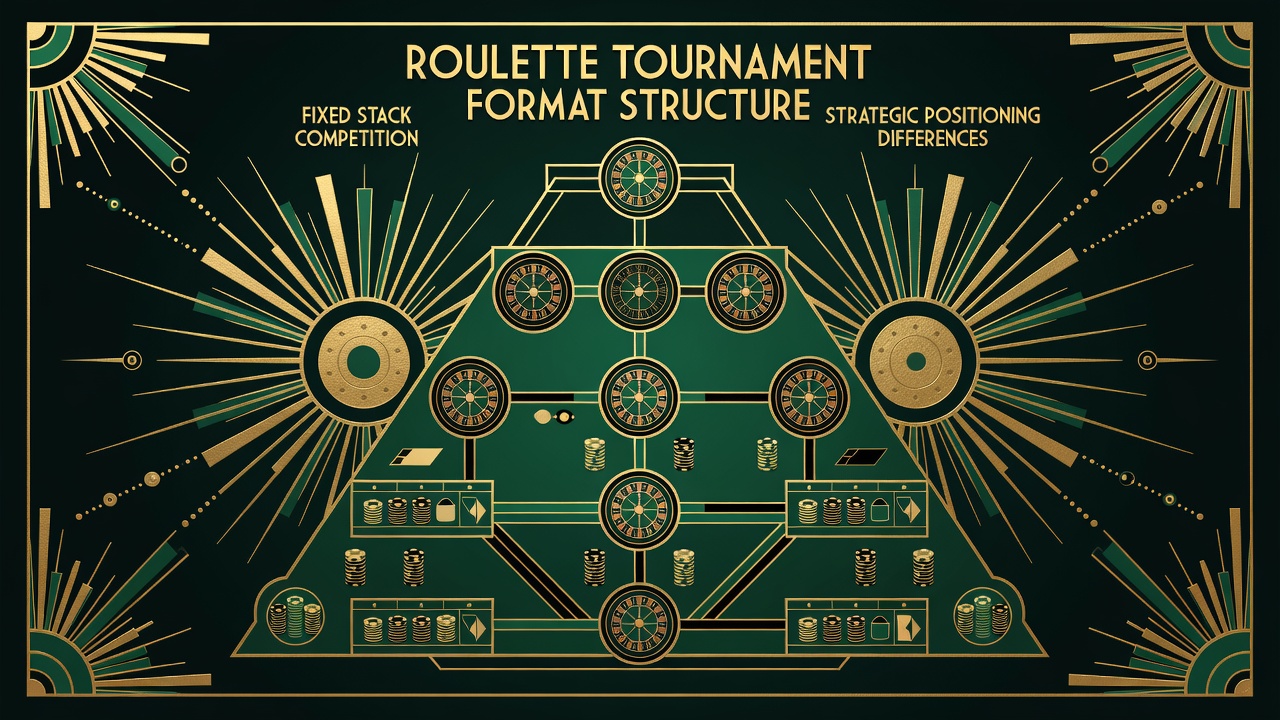
A roulette tournament is a structured competition where players compete simultaneously at roulette tables using an equal starting allocation of chips. The goal is to finish with more chips than your opponents.
The structure creates a fundamentally different game than casual roulette play. In casual roulette, you play to make money. In a tournament, you play to have more chips than your opponents when the time ends.
These are different objectives that require different strategies.
Comparison: Tournament vs Cash
In a cash game, your goal is to maximize winnings. You might play conservatively, minimize risk, and grind slowly. You have no time pressure. You keep playing as long as it is profitable.
In a tournament, your goal is to finish with a larger stack than others. You might need to take risks that you would not take in a cash game. You have time pressure. When the tournament ends, you stop.
A player who finishes with 90 chips is in second place if another player has 91. The one-chip difference is enormous in context. Both players have had similar win rates. The outcome depends on luck variance combined with aggressive play at critical moments.
Tournament Formats
Roulette tournaments come in different formats. A "chip leader" format tracks who has the most chips throughout and may award bonuses to the leader at the end. A "knockout" format might eliminate players who drop below a certain chip count. A "time limit" format ends at a specific time regardless of chip status.
Different formats require different strategies.
In a chip leader format, building a large stack early is valuable because it is publicly visible. Other players know you are winning. This is psychological. Some players fold (metaphorically, in roulette) against strong opponents. Some players become more aggressive.
In a knockout format, your primary goal is survival. You want to keep your chip stack above the elimination threshold. This encourages conservative play when below the threshold and more aggressive play when above it.
In a time limit format, you need to count how many hands remain and adjust your bet size accordingly. If there are 50 hands remaining and you are down chips, you might need to take large risks on a few hands to catch up.
Strategy Principles
The first principle is that risk tolerance changes in tournaments. You should be more willing to accept variance because the variance might push you above opponents' stacks.
The second principle is bankroll management within the tournament. You do not want to go broke before the tournament ends. You need to pace your bets so you still have chips at the finish.
The third principle is table image. If other players perceive you as a big bettor, they might change their behavior relative to you. This is subtle in roulette but present.
The fourth principle is position. Being late to bet (if that is relevant to your roulette variant) gives you information about what others are doing. Information is always valuable.
Why This Matters
Roulette tournaments are not common compared to poker tournaments, but they do exist. They require understanding a different metagame than casual roulette.
If you find yourself in a roulette tournament, your strategy should be to play more aggressively than you would in a cash game when chips are at stake. But you should also manage your bankroll so you do not bust out before the tournament ends.
The winner is usually the player who correctly assessed risk throughout the tournament and made bets that balanced the threat of elimination against the reward of building a large stack.
End of the entry for Day 182