Primers · Daily read
Prop Bets Explained: Player, Team, and Novelty Props
Prop bets are wagers on specific events within a game that don't affect the final outcome. They are heavily mispriced and the house edge is brutal.
By Wendy Cole, 3 min read
Day142
Entered under Primers. Also under Poker, Sports bets and Table maths.
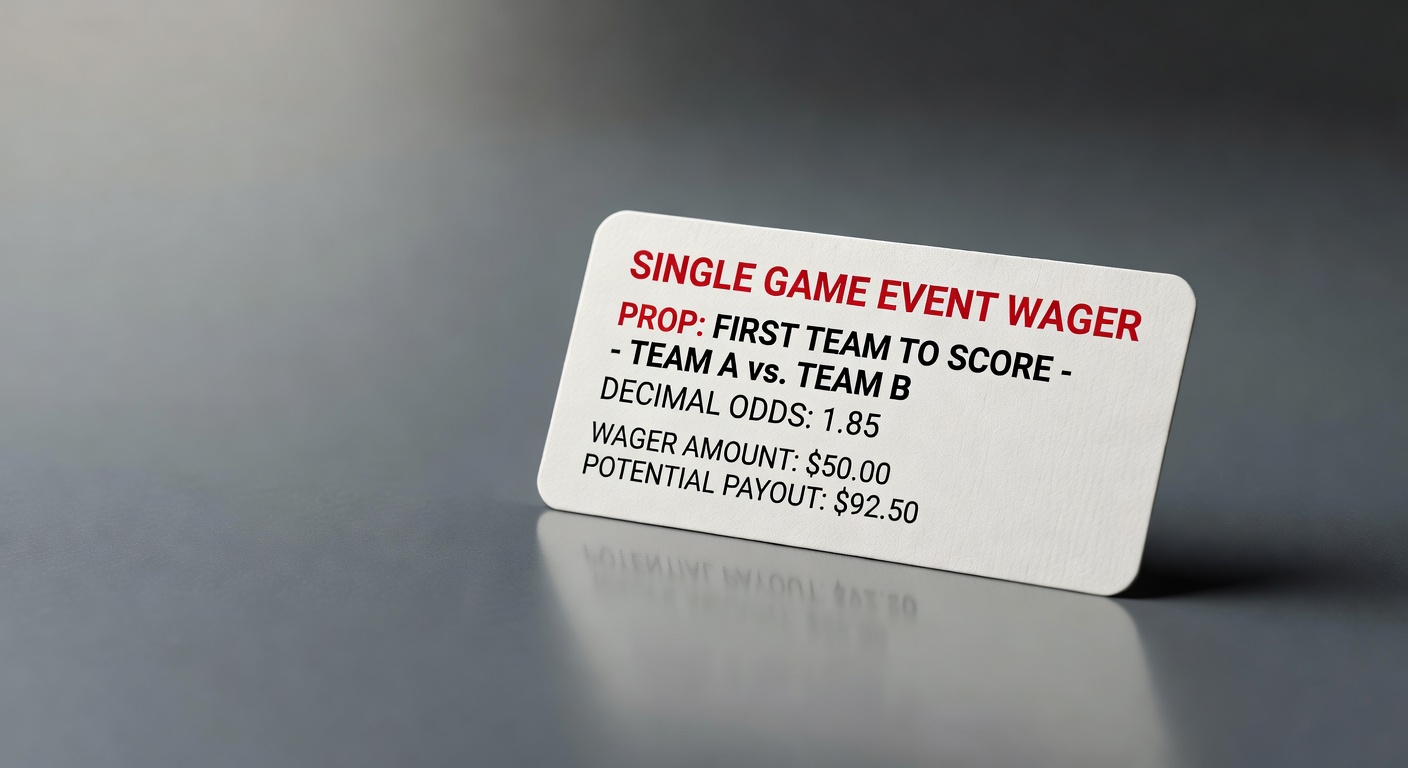
Prop bets are side bets on specific events. A player accumulates 100 yards. A team scores a touchdown. The coin flip lands heads. None of these determine the winner, but you can bet on them independently.
I played poker for 15 years and watched prop bets kill recreational players faster than bad beats. The appeal is obvious: the bets feel more specific, more skill-based (you know a player, you know the matchup). The reality is that props are more mispriced and have higher house edge than the main line.
Player Props
A prop on LeBron James: "Will he score 25 or more points?" The book prices it at -110 (standard even-money odds). If you have any edge on LeBron's scoring, you should take it.
But your edge is minimal. LeBron's scoring is heavily tracked. The line is accurate. You are not outthinking the book. You are not using information the book doesn't have. You are guessing.
Team Props
"Will Team A score 20+ points in the first half?" This breaks down the game into components. Your model might be strong on overall game outcome but weak on first-half distribution. The book knows this. The prop line is priced to capture edge on a dimension where recreational bettors have less information.
I have seen a sharp bettor beat the main line consistently while losing on props in the same game. The prop was a dimension where his edge didn't apply.
Novelty Props
"Will the Super Bowl halftime show last longer than 12 minutes?" These are noise. Pure noise. The house edge is 4-6% because the book has no idea what the answer is and prices for maximum volume, not accuracy.
Never bet novelty props. The edge is always against you and you have no information advantage.
The Math
A prop on player scoring accumulates over a season. A 55% win rate on a -110 prop is break-even. You need 52-55% accuracy just to overcome the juice.
Main line betting at sportsbooks: you need 52.38% to break even (accounting for -110 on both sides). Props: you need 52.38% if they are priced -110, higher if they are priced -120 or -130.
The book raises the vig on props because props have lower volume and higher uncertainty. You are paying for that uncertainty every time you bet.
The Exploitation
Recreational players bet props because they feel more skill-based. A prop on a specific player seems like something you can research. The main line on the game seems like a generic market price.
The book prices mains lines with sophisticated algorithms. The book prices props with educated guesses. Your intuition is more likely to beat an educated guess than a sophisticated algorithm.
But the vig is higher on props, and the volume is lower. Even if you beat the line, the profit is smaller.
What Grinders Do
Grinders either ignore props or they hunt them systematically. If you see a prop line that seems obviously wrong (Team A halftime score at +250 when their average first half is 14 points), you can occasionally find value.
But casual prop betting is bad math. The book is smarter than you on props and they charge you extra for the privilege of playing in an information-disadvantaged game.
Where my edge exists on main lines, my edge collapses on props. This is by design. The book wants casual players on props. The casual players lose faster there.
End of the entry for Day 142