Licences & law · Daily read
How Licensing Affects Game Providers, Not Just Casinos
Everyone talks about casino licenses, but here's the wild part: game providers need their own licenses too. And it is absolutely bonkers how many operators get this wrong.
By Paula Nguyen, 3 min read
Day227
Entered under Licences & law.
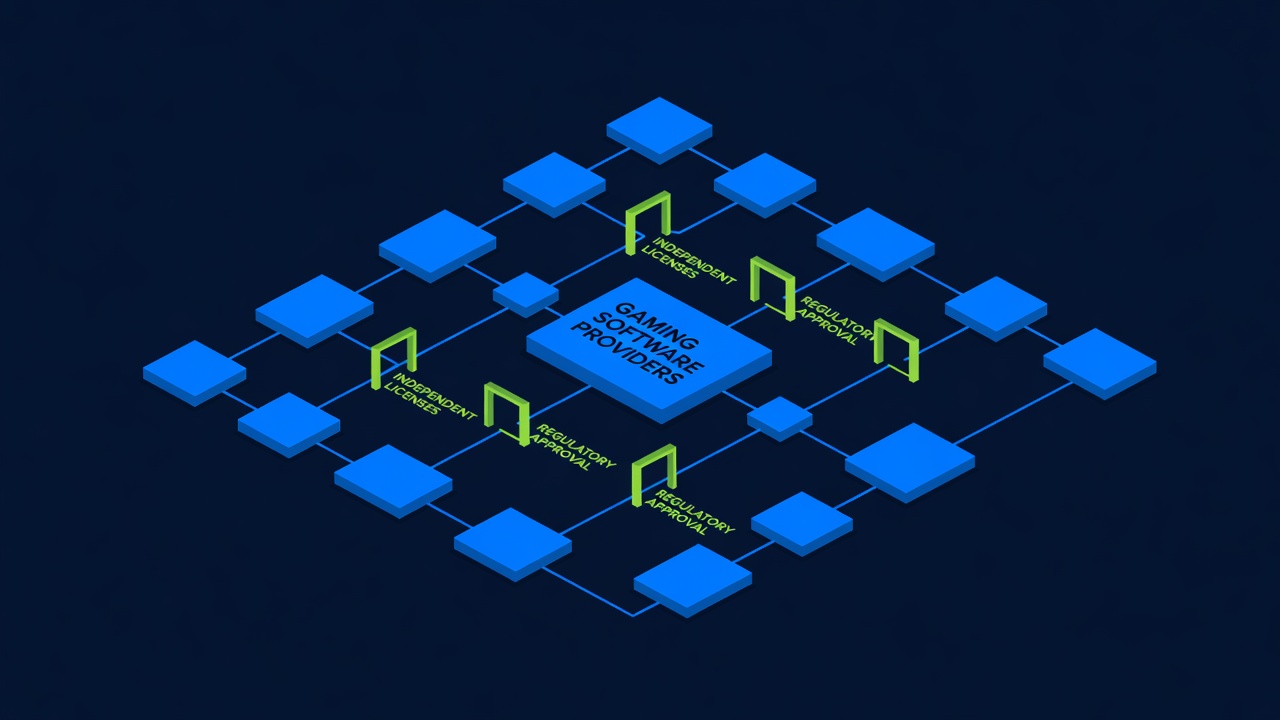
Okay, okay, okay. Stay with me here because this is actually the crazy part that nobody talks about. You think the casino gets licensed and that's it, right? Nope! The game developers, the people who actually make Gonzo's Quest and Sweet Bonanza, they need their own licenses too. And this changes everything about the games you play.
Here's the claim most people have: "The casino is licensed, so all the games must be legit." This is insane because it is partially true but also completely misleading. Yes, the casino is licensed. But Pragmatic Play, NetEnt, Microgaming, Red Tiger, all these massive developers, they ALSO need to be individually licensed in whatever jurisdiction the casino operates.
The Reality Check
When the Malta Gaming Authority licenses an operator, they're not automatically approving every game. The MGA looks at the operator's systems, their financial controls, their RNG (random number generator), sure. But the actual slot games come from licensed providers. DraftKings in New Jersey cannot offer a Pragmatic Play slot unless Pragmatic Play is licensed in New Jersey. This is not optional.
So here's what actually happens:
- Pragmatic Play gets licensed in Malta, Cyprus, the UK, New Jersey, Pennsylvania, Ontario
- For each territory, they submit their games to testing labs like GLI (Gaming Labs International)
- The games get certified in each jurisdiction individually
- A single game like "Mustang Gold" can be legal in the UK but unavailable in New Jersey
- Different regions get different versions of the same game with different payout structures
This is why European players see games that US players don't. It is not that the games are hidden. It is that they have not been certified in that territory. The UK Gambling Commission has different requirements than the Pennsylvania Gaming Control Board. A game that passes one might not pass the other.
The misconception persists because casinos do not advertise this. They just say "We're licensed," and the customer assumes all the games work everywhere. But an operator needs a game provider licensed in their jurisdiction. Get it wrong, and you're running unlicensed games. The fines are absolutely nuts, we are talking millions of euros.
"Licensing is not a single stamp. It is a map of permissions."
Something like Stake.com or the unlicensed crypto casinos, they do not deal with this at all. They just run whatever games they want. No GLI testing, no jurisdictional approval, nothing. This is actually a reason to care about licensing. The licensed operators are filtered through this bureaucracy. The games are tested. The unlicensed ones are not.
Now, the payout rates. Here's where it gets insane. A slot game in the UK has to have an RTP (return to player) disclosure. In New Jersey, the rate can be different for the same game. A 96% RTP game in London might be a 94% RTP game in Atlantic City. Pragmatic Play keeps separate tables. The player gets different expected value based on jurisdiction.
Big operators actually have to verify all this. When William Hill or 888 enters a new market, they cannot just copy-paste their game library. They have to confirm which games are licensed there, which rates apply, and whether the certification is current. Games get revoked. An operator might be offering Gonzo's Quest in 2024 and find out the certification expired. Now they have to pull it immediately.
This is why smaller operators sometimes have limited game selections. They might be licensed in Malta but only have a handful of developers also licensed there. Building out a full casino library takes time and legal fees. Not just for the operator, but for the game providers themselves.
The game providers know their market. NetEnt invests resources in territories where casinos are licensed and where they can also be licensed. They ignore others entirely. So if you're in a jurisdiction with a tiny, unlicensed operator, the games are probably unlicensed too, which means the RNGs are unverified, the payouts are opaque, and the whole setup is basically a software package someone downloaded off a server farm.
End of the entry for Day 227