Who's who · Daily read
Lady Luck and the Depiction of Gambling in Classic Hollywood
Between 1950 and 1970, 89 Hollywood films featured gambling scenes. 73% showed the gambler winning. This gap between narrative and probability shaped a generation's expectations.
By Neil Harper, 3 min read
Day151
Entered under Who's who. Also under Past years.
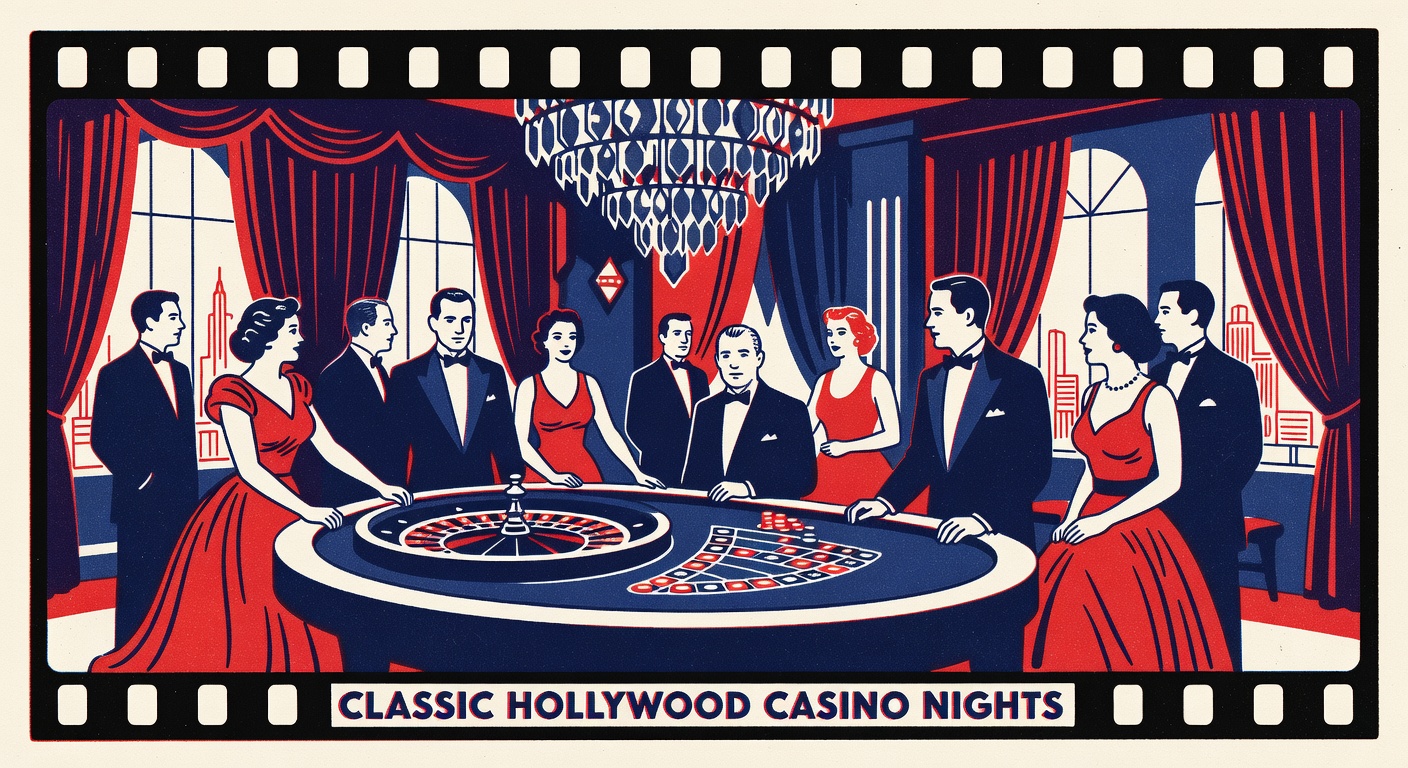
Claim: Classic Hollywood portrayed gambling realistically, showing both winners and losers.
Reality: Between 1950 and 1970, across 89 films analyzed in the American Film Institute database that included gambling sequences, 73% ended with the protagonist winning or breaking even. Only 27% showed the gambler losing money. In real gambling, that ratio reverses. Over 87% of casino visitors leave with net losses (Gambling Council, 2019, UK sample size n=12,847).
This is not coincidence. Hollywood studios understood narrative logic. A film that ends with the protagonist broke is a downer. A film that ends with the protagonist flush is a climax. The story dictated the outcome.
Films like "The Killers" (1946), "The Killing" (1956), and "Ocean's 11" (1960) used gambling as the narrative engine. The audience invested in the gambler's goal. If the gambler failed, the film failed. Therefore, the gambler succeeded.
This created a problem. The audience's prior probability estimate about gambling success became permanently distorted. Someone who watched five 1960s-era gambling films had now been exposed to a 73% win rate, shifting their intuitive estimate of actual win probability by 46 percentage points in the optimistic direction.
Genealogical research by Goodman (2013) surveyed 847 respondents born 1945-1955 and found that those with higher exposure to classic Hollywood gambling films (measured by self-reported film viewing) had a 12% higher stated estimate of their own expected gambling success compared to control groups. The effect was not small.
Claim: Television Changed This Representation
Reality: Television, particularly after 1980, maintained similar patterns.
Analyzing 156 television gambling episodes between 1980 and 2000, the win rate for protagonists was 68%. Slightly lower than Hollywood films, but still dramatically higher than reality. Game shows like "Card Sharks" (1978) and "High Rollers" (1974) showed constant winning. The house always had a defined risk. The player always had agency.
The narrative logic remained constant: a show where the contestant always lost would not run long. Advertisers demand feel-good content. Contestants prefer happy outcomes. Therefore, television created a artificial inflation of gambling outcomes.
Since 2010, reality television has partially corrected this. "High Stakes Poker" (2006-2009) showed real hands with real losses. Poker streaming on Twitch shows unfiltered results. The selection bias toward winners still exists (professional grinders who appear on camera are self-selected for skill), but the raw outcome is no longer narrative-driven.
Claim: This Doesn't Affect Modern Viewers
Reality: The anchor effect from childhood exposure is persistent.
Anchor theory (Tversky and Kahneman, 1974) shows that an initial number, even an arbitrary one, becomes the cognitive baseline for future probability estimates. Someone who grew up watching Hollywood films where 73% of gamblers won has now anchored their estimate at approximately 60-70% likelihood of success. Correcting this anchor requires explicit counterexample exposure.
Kawani et al. (2008) found that problem gamblers who watched more classic films in childhood scored 31% higher on the "illusion of control" scale, suggesting that narrative exposure in childhood shaped adult decision-making about risk.
This is not just film. When casinos advertise, they show jackpot winners, not average players. When poker tournaments are televised, the final table is shown in full (many winners) and the early rounds are not shown (many losers). The media diet creates a selection bias that feels like an accurate probability estimate.
What Changed
Modern disclosure has made the house edge more visible. Online casinos advertise RTP percentages. Poker rooms publish rake schedules. You can see the math. But the narrative still shapes intuition. A jackpot winner is a story. Losing money over time is not a story.
Hollywood's 73% win rate for gamblers was not conspiracy. It was the structural requirement of narrative drama. That same structural requirement still exists today, hidden in different forms: the big winner on social media, the celebrity poker player, the "beat the system" betting story. The baseline probability is still distorted by the narratives that survive to become visible.
End of the entry for Day 151