Deposits & cashouts · Daily read
KYC Documents Typically Requested by Online Casinos
KYC is Know Your Customer. It is the regulatory requirement that casinos verify who you are before letting you gamble. This means documents. Lots of documents.
By Paula Nguyen, 2 min read
Day282
Entered under Deposits & cashouts. Also under Licences & law.
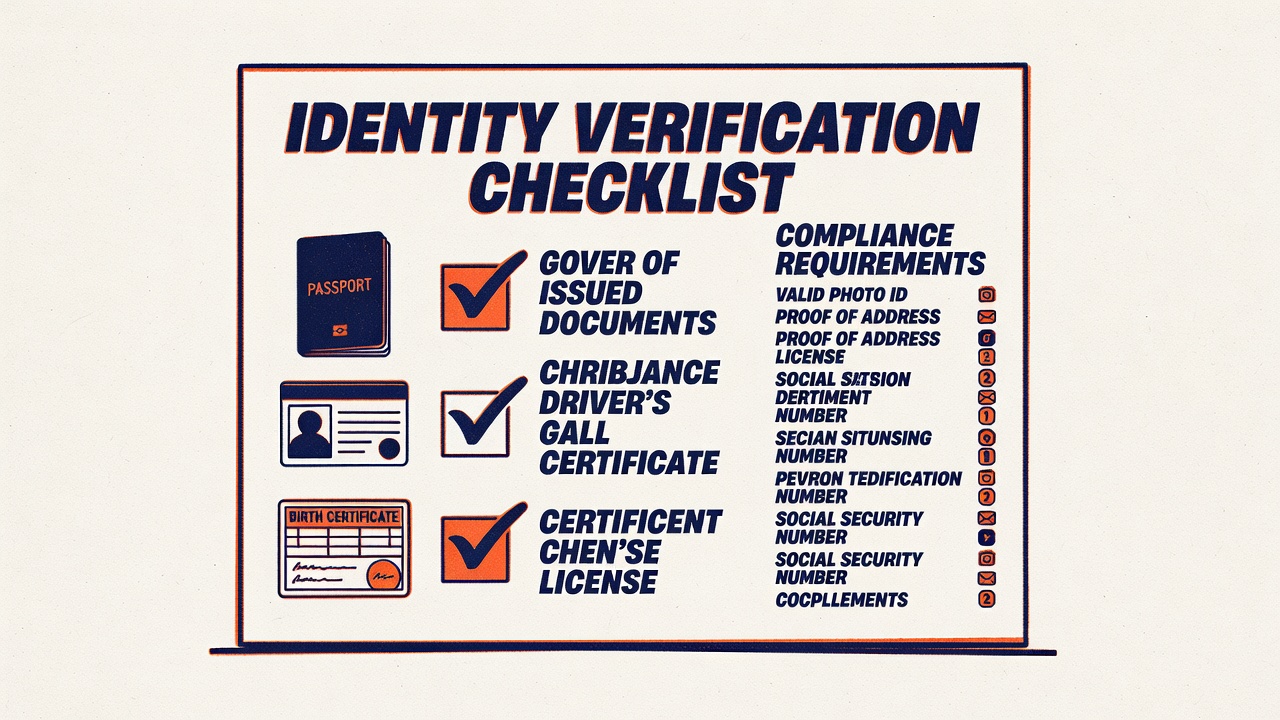
KYC is Know Your Customer. It is the regulatory requirement that casinos verify who you are before letting you gamble. This means documents. Lots of documents. The requirements vary by jurisdiction and operator, but most casinos follow a similar pattern.
The primary ID is your first requirement. A passport, a driver's license, or a national ID card. The casino wants to see your face, your name, your date of birth, and your signature. They scan it or you upload a photo. Some casinos want a front and back photo to verify security features are present.
The proof of address is the second requirement. Casinos need to confirm where you live. This can be a utility bill, a bank statement, a lease agreement, or a government-issued document showing your current address. The document must be recent, usually from the last three months. An electricity bill or water bill works fine.
The source of funds is an increasingly common request. Casinos want to know where your money comes from. If you are depositing large amounts, they might ask for bank statements, employment letters, or tax returns. The purpose is to ensure you are not using casino accounts to launder money.
The Document Requirements
Most regulated casinos want:
- Government-issued photo ID (passport or driver's license)
- Proof of address (utility bill, bank statement, or government document)
- Source of funds (bank statement, employment verification, or tax return)
Additional documents might include:
- Proof of beneficial ownership (if the account is not in your personal name)
- Additional ID if your name has changed
- Family relationships (if a dependent is involved)
The verification process can be instant (if the casino has automated checks) or take days (if documents are reviewed manually). Most casinos try to complete verification within 24 hours. Some take longer.
"The documents are not invasive because the casino wants to know you. They are invasive because regulators require it."
Rejections happen when documents are unclear, out of date, or incomplete. A photo that is too blurry and the casino cannot verify it will be rejected. An address proof from six months ago might be rejected if the policy requires three months. An employment letter without a date of issue might be rejected.
The privacy question is real. You are giving casinos your personal financial information. They are required to protect it and not share it without permission. But data breaches happen. A casino that loses your banking information has exposed you to identity theft risk.
Some casinos are worse than others at handling documents. A reputable casino (DraftKings, FanDuel, established online casinos) will treat your documents professionally. A sketchy offshore site might sell your information. This is another reason to choose licensed operators.
The appeal process exists. If the casino rejects your documents, ask why. If it is a clarity issue, you can resubmit. If it is a policy issue, you can contact customer support and escalate. Some casinos are reasonable about rejections. Others are final.
One tip: upload documents that are clearly legible. A blurry passport photo will be rejected. Crop them so the relevant information is visible. Some casinos have specific upload requirements. Check before submitting.
End of the entry for Day 282