Past years · Daily read
The History of Bookmaking: From Ancient Rome to Modern Sportsbooks
They've been taking bets on horse races since the first century AD. The tech changed. The vigorish stayed the same.
By Neil Harper, 3 min read
Day241
Entered under Past years. Also under Headlines and Sports bets.
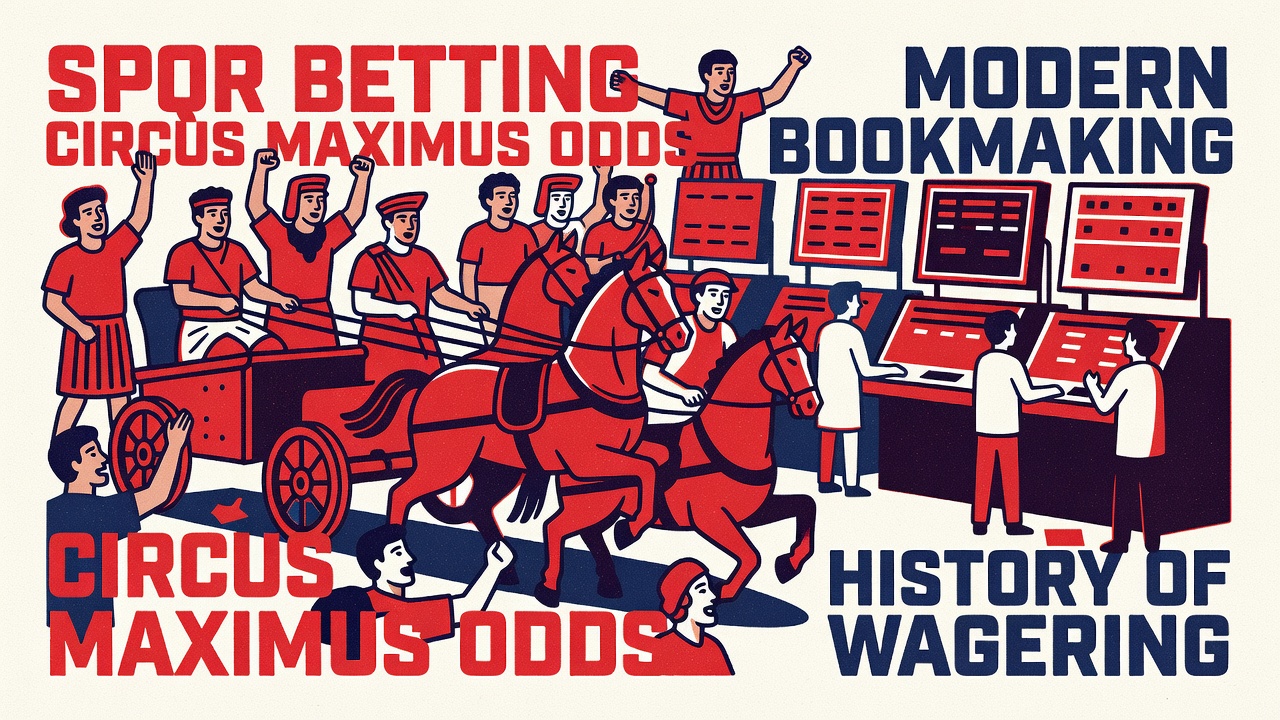
The first sportsbooks operated in Rome around 100 AD. Not officially, mind you. Never officially. Wealthy Romans wagered on chariot races at the Circus Maximus, and someone was always there taking the other side. The setup was the same then as it is now: you put up money, agree on odds, shake hands, and hope the gods favored your horse.
The Romans had no legal framework for this. No licensing board. No receipts. Just a man who remembered who owed him what, and the muscle to collect. But the mechanics of the bet were already there. Odds were negotiated. Payoffs were percentaged. A bookie in 100 AD took a cut exactly like a modern sportsbook takes juice on a -110 line. The mechanism is older than Christianity.
The Medieval Blank
Somewhere between the fall of Rome and the Renaissance, betting went underground. Not because it stopped. Because the Church decided it was sinful, and sinful things in medieval Europe happened in taverns where the priest did not look too hard. By the 1400s, organized betting on races had reemerged in England. The King's racetrack at Ascot was already a betting destination by 1600. This was not accidental. Races needed spectators. Spectators brought money. Money needed odds.
- 1600s England: organized racing at Newmarket, early betting syndicates
- 1800s Britain: William Hill and other early bookmakers opened actual shops
- 1900s America: bookmaking was technically illegal but operated openly in every major city
- 1950s-1960s: Nevada created a legal framework, other states followed slowly
The betting shops of London in the 1850s were the first real storefronts. Men in waistcoats with ledgers and chalkboards, taking wagers on horse races from a betting window. This is where the modern bookie was born. Not invented. Born. The slot machines came later. The racing form came later. But the basic operation of a sportsbook has not changed since William Hill took his first bet in 1934.
The vigorish, the juice, the cut the house takes: it was 5% in 1934 London and it is roughly 4.55% now on a standard -110 line. The bookmaker survives by being on both sides of the action and taking a slice from each. This was true in 1850 London and it is true on DraftKings today.
"Every modern sportsbook is just a William Hill from 1950 with better software and worse cigarette smoke."
The transition from person-to-person betting to organized sportsbooks took three centuries. Street-level bookies operated in New York, Chicago, and Boston for a hundred years while the activity remained technically illegal. The numbers racket, the policy game, underground racing books. These were not fringe activities. They employed thousands. They operated openly because the cops were paid and the fines were priced in as a cost of business.
Las Vegas changed the equation in 1949 when Nevada legalized sports betting. Suddenly, there was a legal place to take wagers. The illegal books did not disappear. They just operated alongside the legal ones. A gambler could walk into the Flamingo or go to a house in Henderson and get similar odds. The legal books paid taxes. The illegal ones paid off cops. But the odds were nearly identical because they were based on the same underlying math.
Internet betting arrived in 1995. An offshore sportsbook in the Caribbean started taking wagers online. By 2000, there were hundreds of them. The US government made this technically illegal in 2006 with the Unlawful Internet Gambling Enforcement Act, but the sites kept operating. They just moved servers and accepted money through workarounds. The model was the same as it had been for fifty years: a person or entity takes one side of a bet, manages the risk, and profits from the cut.
Legalization has been creeping back. New Jersey legalized in 2018. Now forty-five states have some form of legal sports betting. The illegal books are not gone. They still operate. They still offer credit to known customers. They still have the speed advantage of no app, no waiting for an approval, just a phone call. But the legal books are now the default for anyone with a smartphone.
End of the entry for Day 241