Who's who · Daily read
High Stakes Poker: The Show That Defined an Era
High Stakes Poker ran from 2006 to 2011, and it changed how the world saw poker as a game and as spectacle.
By Chris Vaughn, 3 min read
Day270
Entered under Who's who. Also under Past years and Poker.
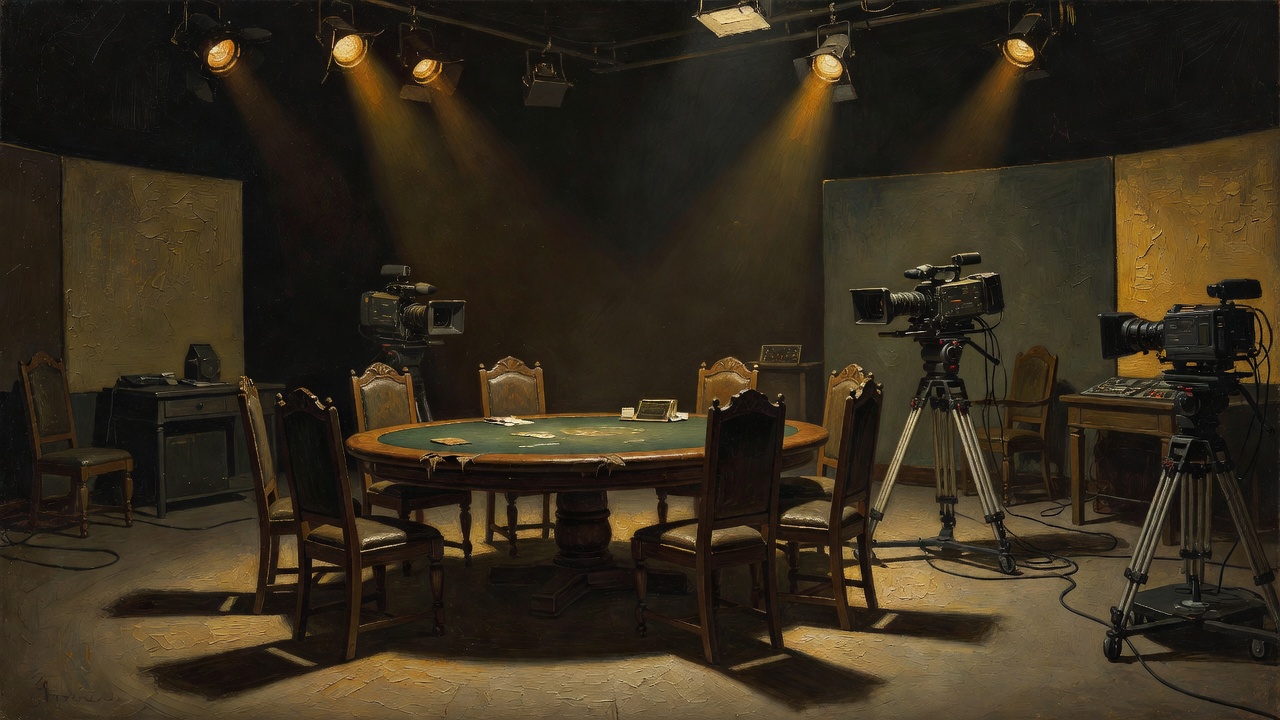
High Stakes Poker premiered on GSN in January 2006. The show was filmed at various casinos, but its primary stage was the Ivey Room at the Commerce Casino in Los Angeles. The format was simple: six to eight professional players, a camera setup inside the table, and a commentary track from Norm MacDonald and occasionally others. The stakes started high and sometimes went higher during the broadcast.
From an architectural perspective, the show was a machine designed to keep eyes on the screen. The table itself was built with sightlines. The camera was positioned so the viewer could see every card and every player's reaction. The lighting was harsh and deliberate, designed to catch the micro-expressions of players trying not to tell each other anything.
The Commerce Casino's rooms had been designed decades earlier for other purposes. High Stakes Poker converted those rooms into something new. The walls were dark. The poker table was elevated. The chairs were comfortable because the games sometimes lasted six hours at a stretch. This was not decorative. Every choice made the viewing experience more compelling and the game itself more visible.
The Architecture of Visibility
The genius of High Stakes Poker was that it did not feel like a televised game show. It felt like you were watching an actual high-stakes poker game that happened to be filmed. This required specific architectural choices.
- The table height was slightly raised so cameras could see players at an angle
- Lighting came from directly above to reduce shadows
- The dealer position was offset slightly to keep the dealer from blocking camera sightlines
- The chip stack heights were made visible through the camera so viewers could follow the action
- The room temperature was controlled because the sessions were long
Norm MacDonald's commentary was sparse and frequently self-aware. He would occasionally make fun of the players or mention that he was not a poker expert. This self-effacement made the show feel less like a produced product and more like a documentary. The architecture of the show was invisible because Norm's voice made you forget you were watching a television production.
The chips used on the show were standardized. The cards were standard. But the setup itself was designed to maximize drama and information simultaneously. A viewer who knew poker could read the tension from body language. A viewer who did not know poker could enjoy the tension from the editing and the commentary.
The spatial arrangement of the players mattered. A known aggressive player might be positioned at a seat that historically generated a certain kind of dynamic. Ivey and Negreanu were often at the same table because their games created a natural friction. The table was not arranged randomly. The people who arranged the seating understood game theory and table dynamics.
"The show was not about winning and losing. It was about the mechanics of human decision-making under stress."
The longevity of High Stakes Poker from 2006 to 2011 (and various revival attempts later) came from the show's architectural choices. It created a space where poker looked like what it actually was: a game of incomplete information, subtle deception, and incremental advantage. Not a game of luck. Not a game of magic. A game.
The room itself became iconic. Players specifically wanted to be on the show because the visibility, the format, and the commentary all amplified their reputations. An excellent poker player could appear on High Stakes Poker and look like a master. An okay poker player could appear and look mediocre. The show had no mercy for bad plays. The architecture of visibility meant that mistakes were visible.
Some shows had a certain physical energy. The Ivey Room on High Stakes Poker had the energy of a place where significant money changed hands, but also the energy of a place that was designed to be watched. This double consciousness shaped how players played. They were playing for themselves and for the audience. The best players seemed not to notice the cameras. The worst players became self-conscious.
When the show ended in 2011, poker had changed. More people played. The professionalization of the game accelerated. The online poker world had nearly died in 2006 with the UIGEA, but live poker had become a spectator sport. High Stakes Poker was part of that transition, and the architecture of the Commerce Casino's setup, the camera placement, the lighting design, the chair comfort, the chip stack visibility: all of it contributed to making a poker game look like something worth watching.
End of the entry for Day 270