Our tests · Daily read
Cluster Pays vs Payline Slots: Key Differences
Cluster pays and traditional paylines are completely different slot mechanics. Cluster pays feel looser. Paylines feel tighter. The house edge is usually identical.
By Sam Ortega, 2 min read
Day215
Entered under Our tests. Also under Slots and Table maths.
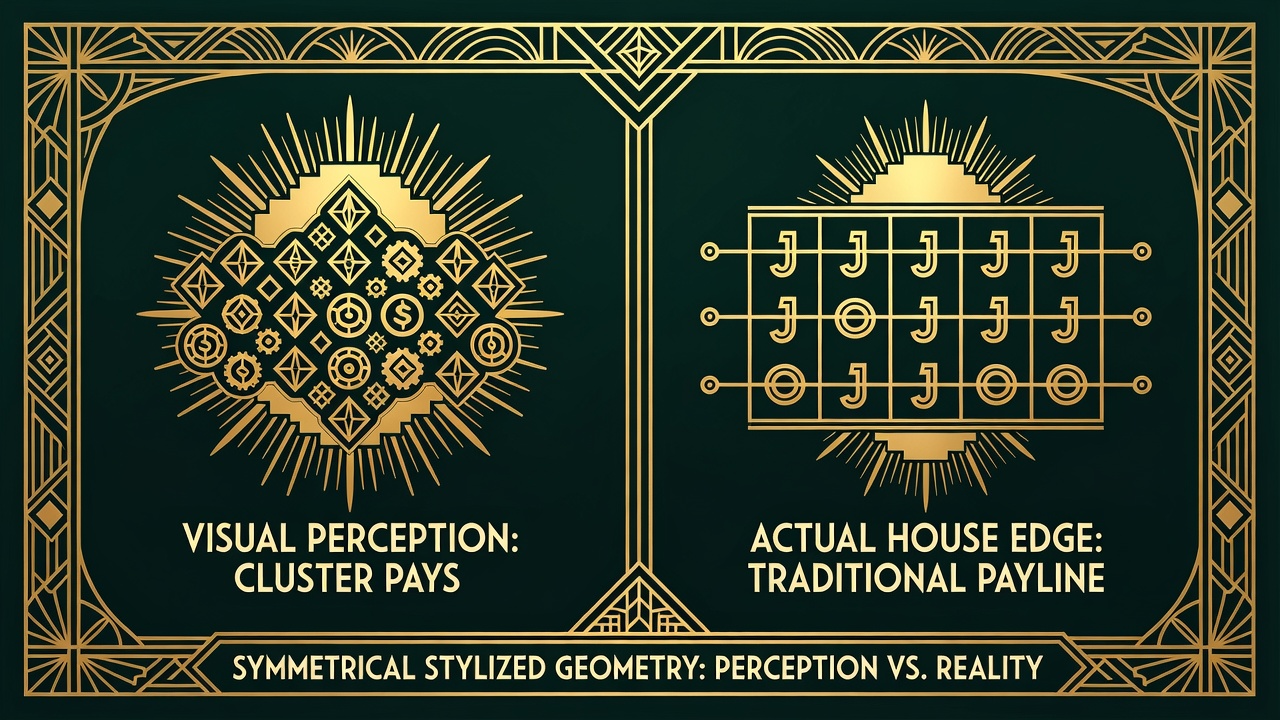
You know what I mean? Cluster pays. Six by five grid. Symbols touching each other. Boom. Win. No paylines. No counting across the middle. No "is this even a payline."
Old school paylines. Three reels. Left to right. Middle line. Maybe some diagonals. You count paylines. Ten paylines. You're betting ten credits. Miss one, miss all. The math is transparent. The rules are simple. You hit the line or you don't.
Cluster pays changes your brain. You stop thinking lines. You start thinking explosions. Symbols match next to each other. They disappear. New symbols fall. Cascades. That is the word. Cascading. Makes it feel like there is action in the machine. Wind-up. Release. Repeat. It feels like something is happening. Something is always happening.
How Cluster Pays Work
A cluster pay slot has a grid. Usually six reels, five rows. Thirty symbols total. Adjacent matching symbols form clusters. A cluster of three pays. A cluster of four pays more. A cluster of thirty (the whole grid) pays the maximum.
When you get a cluster, those symbols are removed. Everything above falls down. New symbols enter from the top. You can get cascades on cascades. One cluster triggers another. Multiple cascades means multiple wins from a single spin.
Paylines are different. You bet on specific lines. The computer evaluates each line independently. No cascades. No removal. Just yes or no on each line. Simple. Static. Done.
The Perception Difference
Cluster pays feel generous because you see multiple wins per spin. Cascades make it feel loose. Paylines feel tight because you need exact matching on exact lines. But here is the thing: the house edge is usually the same. Five percent house edge on a cluster game. Five percent house edge on a payline game. The volatility might differ. The edge does not.
The cascading mechanic creates retention. You sit longer. You place more bets. You do not feel like you are losing because the screen is always activating something. Paylines feel slower. Missing paylines feels conclusive. You lost this round. Clusters never feel conclusive. There is always possibility of the next cascade.
Why Casinos Love Cluster Pays
Cluster pays increase session length. Time on device. Bets per hour. The house edge does not change but the absolute dollars extracted increase because the volume increases. A player at a payline machine places sixty bets per hour. A player at a cluster machine places ninety bets per hour. Same edge. Thirty percent more revenue.
The design is not accidental. Pragmatic Play designed cluster pays specifically to increase engagement. It worked. Every provider copied it immediately. Now cluster pays are everywhere.
Which is Better
Neither is better if you are trying to minimize loss. Both extract money at roughly the same rate. Cluster pays feel better because of the visual excitement and cascades. If you want to enjoy your session longer and do not mind losing the same amount over more time, cluster pays. If you want to get the expected loss over with quickly, paylines.
But here is real talk. The machine does not care which one you play. Both are designed to take money. Cluster pays are just better designed at taking it while making you feel good about the transaction. That is the entire difference.
End of the entry for Day 215