Blackjack · Daily read
3:2 vs 6:5 Blackjack Payouts: Why This Ratio Changes Everything
I watched this ratio get squeezed out of the Strip one pit at a time. Started in the early 2000s. Quiet, patient, relentless. By the time the tourists noticed, most tables on the Boulevard paid six for five and nobody under forty remembered different.
By Sam Ortega, 5 min read
Day118
Entered under Blackjack. Also under Past years, Licences & law, Our tests and Table maths.
1956: The Payout Was Three to Two and Everybody Knew It
When I started on the floor in 1981, the number on the felt was 3 to 2. You got a natural, dealer pushed you $15 on a $10 bet, and life was good.
That number was old. Not old like ten years old. Old like the Flamingo opened in 1946, Ben Siegel's people ran 3 to 2, and every operator in Nevada followed suit because the Gaming Control Board liked standards and because copying what worked was cheaper than inventing. The Dunes paid 3 to 2. The Sands paid 3 to 2. The Desert Inn, the Tropicana, the Stardust, Binion's Horseshoe. You did not advertise the payout because the payout was blackjack. The payout was the game.
Then the math guys got to the suits.
The 1960s: Thorp Changes the Threat Model
Ed Thorp publishes Beat the Dealer in 1962. It teaches ten-count card counting, it gets on the New York Times bestseller list, and it convinces every pit in Vegas that their edge is too thin. The casinos respond with multi-deck shoes, more frequent shuffles, and backing off players who look like they are counting. The 3 to 2 payout, though, stays intact. Touching the payout is sacrilege. The suits know it.
For the next thirty years, 3 to 2 is a given. A pit boss would no more change the payout ratio than change the color of the chips.
1992: The Double Exposure Footnote
Somebody, I think it was at the Sahara, rolls out a variant called Double Exposure. Both dealer cards face up, but to balance the math the blackjack pays even money. Tourists love it because they can see everything. Locals will not touch it. The edge is ugly once you run the numbers. But the idea is planted. Payout ratios can be a lever. That is the dangerous thought.
1999 to 2003: Single Deck Comes Back With a Catch
Here is where the real move starts.
A handful of mid-Strip and downtown properties begin offering single-deck blackjack again. Single deck is a player favorite. Thinner deck, faster decisions, better basic-strategy edge. Tourists line up. The casinos know what they are doing. They keep the single deck and they quietly change the payout on blackjack to 6 to 5.
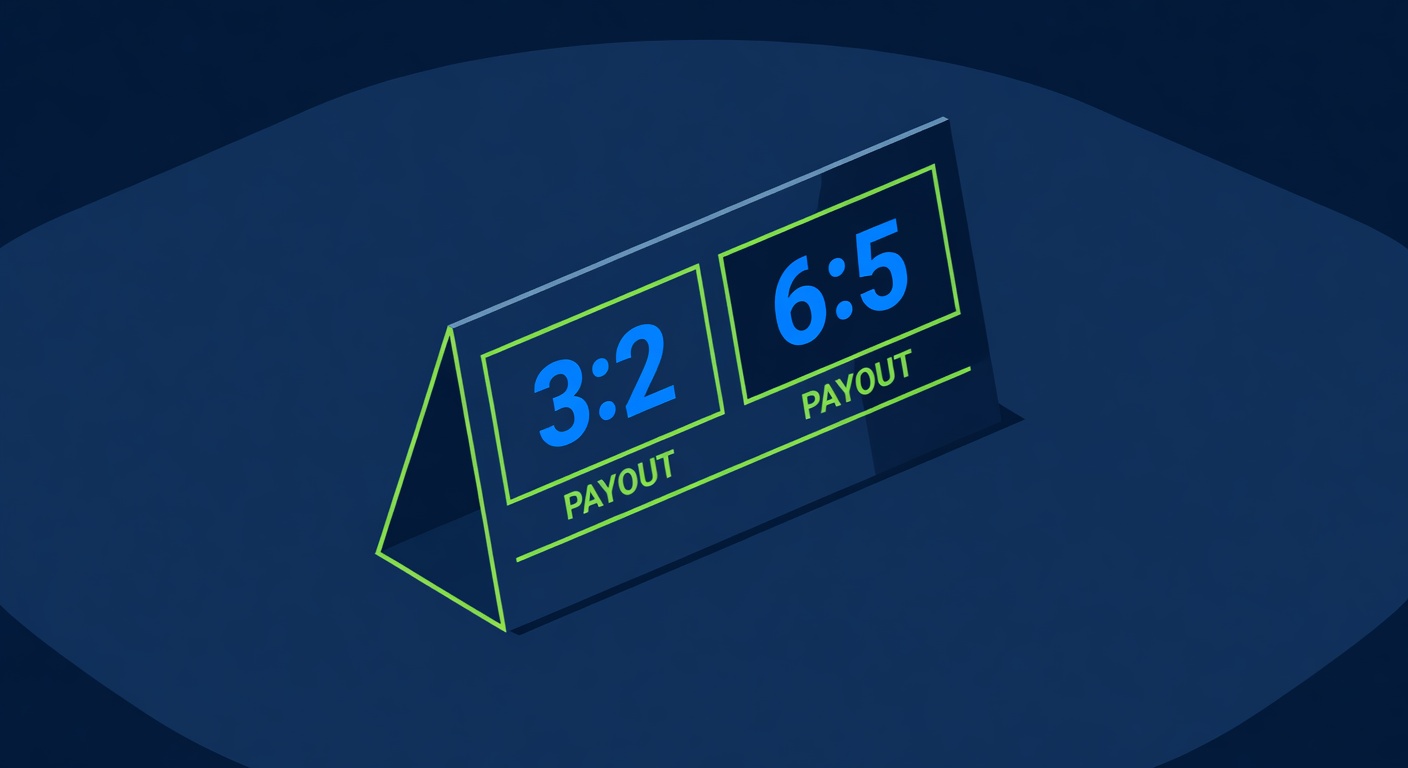
$10 bet, natural, you get $12 instead of $15.
That three-dollar difference, on a hand that hits roughly 4.8 percent of the time, swings the house edge from about 0.15 percent on a good single-deck rule set to about 1.45 percent. A full percentage point. The worst bet move in the modern era and barely a peep in the press.
Mid-2000s: 6 to 5 Goes Global
By 2006 the 6 to 5 payout is on the Strip in force. MGM, Harrah's, Caesars properties, the works. Not every table. The high-limit room still runs 3 to 2 because the whales notice and the whales complain. The main floor, though, the $10 and $15 tables where the tourist sits down with his second margarita, is 6 to 5 most places by 2008.
The industry's argument: single deck, faster action, still a good game. The math does not care about the argument.
The Difference in Plain Numbers
Let us put this next to each other for a minute.
- 3 to 2 payout on a $10 bet, natural, pays $15.
- 6 to 5 payout on the same $10 bet, natural, pays $12.
- Difference per blackjack: $3.
- Natural frequency: about one hand in 21 in a multi-deck shoe, a touch better in single deck.
- Over 100 hands, you can expect roughly 4 or 5 blackjacks.
- Over 100 hands, the 6 to 5 game costs you about $12 to $15 more than the 3 to 2 game, before any other rule differences.
That is your second drink. That is your cab home.
2010s: The Slow Creep
After the financial crisis, the Strip gets hungrier. Resort fees appear. Parking fees appear. 6 to 5 spreads to the low-limit tables at downtown properties that used to be the tourist's refuge. The Continental shuts. The El Cortez still holds 3 to 2 on most of its tables because Jackie Gaughan's old guard understood the math and the customer.
By 2015 it is fair to say: if you walked onto the Strip and sat down at the first open blackjack seat you saw, odds were you were on a 6 to 5 game.
Today, 2026
Here is the current state of play, as best I can tell from the floor reports I still get from old friends who never retired the way I did.
- Off-Strip locals casinos: still mostly 3 to 2. The regulars would riot otherwise.
- Downtown: split. The Golden Nugget has both. El Cortez still has the good stuff. The D is mixed.
- The Strip low-limit main floor: 6 to 5 dominant.
- High-limit rooms across the Strip: 3 to 2, because the whales know.
- Online: the licensed live dealer tables generally publish the ratio. Read it.
What to Do About It
Two things. First, look at the felt before you sit. The payout is printed right on it in small letters. "Blackjack pays 3 to 2" means you are fine. "Blackjack pays 6 to 5" means you walk. Do not sit. I do not care if it is the only open seat at the Bellagio. Walk. Find a 3 to 2 game. They exist.
Second, tell the people you brought with you. Your cousin from Ohio who came out for the bachelor party does not know the difference. He will sit at a 6 to 5 table in his new Hawaiian shirt and think he is playing blackjack. He is not. He is playing a tax on his vacation.
What It Tells You About the Industry
The 6 to 5 move is the cleanest case study I know of in how the business quietly shifts pricing when it thinks nobody is counting. No press conference, no change in the rules, no new game invented. Just a different number stitched into the felt and a decade of tourists who never noticed.
I am not mad about it. I was on the floor. The house is allowed to run the house. But if you are going to play, you play the good game. The good game is still out there. You have to walk a little farther to find it.
End of the entry for Day 118